Perhaps no one found a partner that day, but the Indian city of Jaipur was on the verge of a stampede due to a promise of love. Last September, a human tide surrounded the Moti Dungri Ganesh temple to get a small bag of blessed henna. Popular belief holds that applying this mehndi, a vegetable paste traditionally used to decorate hands, helps singles find a husband or wife. No dating apps or marriage brokers were needed. It was enough to entrust oneself to the god Ganesh and take home a bit of that miraculous paste.
The most exaggerated estimates spoke of two million attendees. The images offered their own measure of chaos: pushing around huge plastic containers, young people elbowing their way through, police blowing whistles that no one heard, and endless lines that paralyzed the streets near the sanctuary.
The temple had prepared 3,500 kilos of henna, distributed in small bags that sold out in just three hours. The tradition dates back around two centuries, but for generations, it had mainly attracted Jaipur locals. This year, several viral videos claimed that the paste had extraordinary powers and that those who applied it would find a partner and get married within six months to a year. WhatsApp, Facebook, and YouTube did the rest: they turned a local superstition into a massive gathering against singleness.
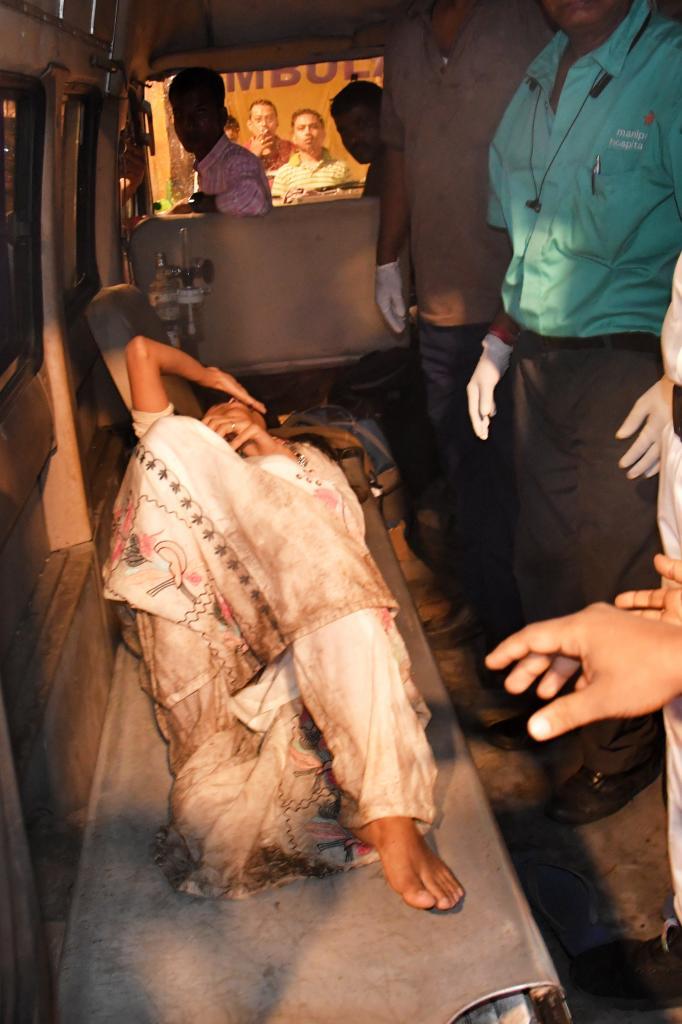
In Jaipur, there were scenes of panic, but much worse was what happened this Saturday in Calcutta, where at least 19 people were crushed to death and dozens were injured during the Durga Puja celebrations, one of the most important Hindu festivals in the country. Among the deceased was a seven-year-old girl.
The tragedy occurred in a religious pavilion when a torrential rain pushed hundreds of visitors to seek shelter in a crowded enclosure. The crowd became trapped between narrow entrances and insufficient exits.
The episode has once again brought to the fore an old debate in India: a country that still cannot guarantee the safety of millions of citizens who gather to pray. Stampedes are a recurring tragedy. Pilgrimages conceived as expressions of devotion end up becoming deadly bottlenecks.
In 2005, 265 people died at the Mandhardevi temple in Maharashtra after several devotees slipped on stairs covered with coconut remnants and liquids used in offerings. Three years later, a rumor about a possible collapse caused a stampede that left 145 dead at Naina Devi. That same year, another crush near the Chamunda Devi temple claimed the lives of around 250 pilgrims.
In 2011, 104 devotees died on their way back from Sabarimala, the Kerala sanctuary that devotees visit after completing 41 days of strict spiritual discipline, vegetarianism, and abstinence. In 2013, a rumor that a bridge was about to collapse triggered another crush near the Ratangarh temple, with 115 fatalities. And in 2024, in Hathras, 121 people lost their lives after attending a ceremony led by a guru who had gathered many more followers than authorized.
The greatest demonstration of the faith's drawing power came in 2025 with the Maha Kumbh in Prayagraj, considered one of the largest religious gatherings in history. The Indian government stated that 660 million visits were recorded during the six weeks of the festival. Pilgrims came to immerse themselves in the confluence of the Ganges and Yamuna rivers and the mythical Saraswati, convinced that those sacred waters could cleanse their sins and help them escape the cycle of reincarnations.
Authorities deployed thousands of police officers, surveillance cameras, drones, and a sophisticated crowd control system using artificial intelligence. But not even that technological mobilization prevented at least 30 people from being crushed when millions of devotees tried to reach the water during one of the most auspicious days of the Hindu calendar.
Behind these tragedies also emerges a fascinating India, populated by specialized shrines that can solve almost any problem of everyday life. There are temples to find a partner, have offspring, overcome illnesses, pass exams, or secure a job abroad.
In Tamil Nadu, in the south of the country, the Kalyanasundareswarar temple has become a favorite destination for those who have been waiting too long for a wedding. According to tradition, it is where the god Shiva and the goddess Parvati got married. Singles come to ask for obstacles preventing them from finding a husband or wife to be removed.
On the outskirts of Hyderabad, the Chilkur Balaji sanctuary has specialized in a much more contemporary aspiration: leaving India and starting a new life abroad. It is popularly known as the "visa temple." Students, engineers, and IT professionals walk around the precinct 11 times while praying for consular authorities, especially the U.S. ones, to approve their applications. If they receive the coveted permit, they return to complete another 108 rounds as a sign of gratitude.
Other shrines have even more peculiar customs. In Tirupati, one of the most visited Hindu pilgrimage centers, many devotees fulfill their vows by offering their own hair. Men, women, and children shave their heads as a sign of humility and dedication to the god Venkateswara. The collected hair is later sorted and auctioned to make wigs and extensions that end up in international markets.
In the Karni Mata temple in Rajasthan, the stars are around 20,000 rodents that roam freely through the courtyards, altars, and corners of the precinct. The animals are considered sacred, and pilgrims feed them with milk and sweets. Consuming food touched by the rats is seen as a blessing.