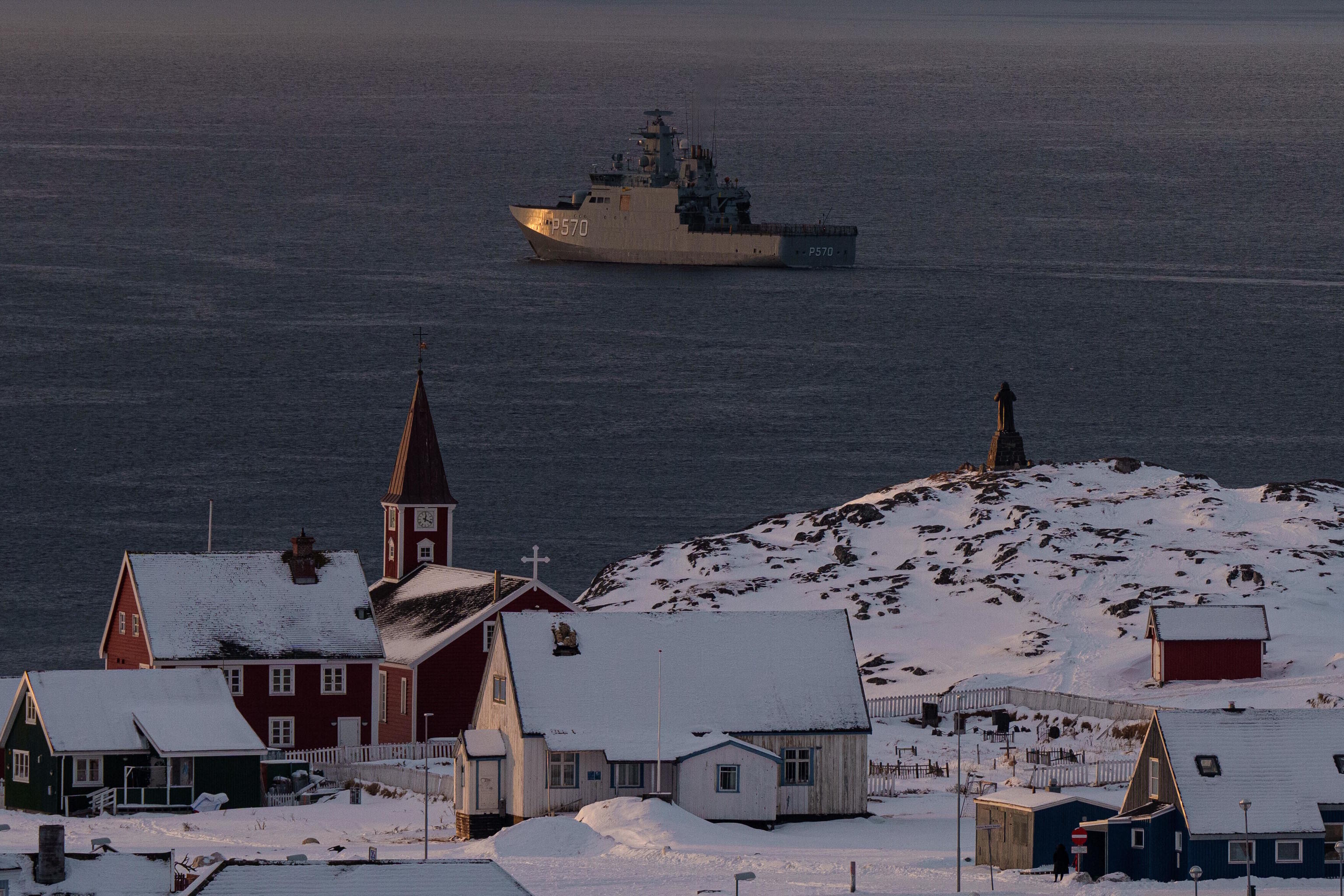
Climate change is going to completely alter navigability in the Arctic. This region is warming four times faster than the rest of the planet, and that will have a significant impact on civilian and military connections. In this new context, icebreakers will play a crucial role, further accelerating the opening of routes and reaching places that recently seemed unreachable. And that is why they are one of the key points of the new strategy with which the European Commission aims to address the growing pressure from Russia, China, and the United States in the area surrounding the North Pole. But the problem is that the European Union is very, very behind.
"Currently, we have around ten icebreakers among the EU Member States, and the Russians have about 40," explain sources from the Commission when asked about the specific numbers they handle. "However, these are different types of icebreakers designed to operate in partially different environments. Although we know that some of them cannot operate in the Arctic, we cannot provide an exact number of how many icebreakers are prepared to do so," added European Commissioner for International Partnerships, Jozef Síkela, yesterday.
This means that the EU has a quarter of the icebreakers that Russia owns, but some of them cannot operate in certain points of the Arctic. Additionally, among those 40 Russian ships, eight of them would be nuclear-powered. Much more powerful, ultimately.
"But this further highlights the importance of the Arctic strategy. We need to have a comprehensive view of our current capabilities and increase the production of multifunctional icebreakers to meet different needs," Síkela insisted during the press conference he held in Strasbourg alongside the High Representative of the Union for Foreign Affairs and Security Policy, Kaja Kallas.
And "the EU is home to world leaders in icebreaker design and construction, particularly Finland, and also some countries like Germany have production capacity," add sources from the Commission. "It is necessary for Member States to increase their icebreaker fleet to meet maritime security needs, including the ability to repair cables, and also for research purposes," emphasize sources from the European Commission. But, as is always the case when discussing a EU strategy, none of this is budgeted or scheduled. It is all a "first step" that will now have to go through the European Council (the countries) and the Parliament, and will also depend on the negotiations of the next European budget and the effort that the countries themselves are willing to make.
In the presentation of this same document on the Arctic, both Kallas and the President of the European Commission, Ursula von der Leyen, made it clear the geopolitical importance that this region of the planet is gaining. From a security, economic, and critical raw materials perspective. And those same sources from the European Commission are even more direct. "The Arctic is at risk of becoming a new security scenario. Once the war in Ukraine ends, and we all hope it ends soon, the Arctic could very well be the next focus of attention."