Last month, when the heads of state and government of 140 countries attended the United Nations General Assembly, the elephant in the room was undoubtedly the election of the next Secretary-General. Almost no speech made explicit reference to the matter, except for the outgoing Antonio Guterres, whose term ends in December. But delegations were aware of the negotiations, backstabbing, and maneuvers in the shadows.
There were seven firm candidates: former Chilean President Michelle Bachelet, former Vice President of Costa Rica Rebeca Grynspan, Argentine Rafael Grossi, Director-General of the International Atomic Energy Agency, Ecuadorian María Fernanda Espinosa, Guyana's Ambassador to the UN Carolyn Rodrigues-Birkett, former Senegalese President Macky Sall, and Ugandan politician and diplomat Olara Otunnu, who previously served as Deputy Secretary-General and is familiar with the organization. Bachelet withdrew during those days upon realizing she had no chance of overcoming the U.S. veto, but the growing feeling was that perhaps none of them would end up getting the job. Indirect messages from the most important countries suggested that there was no clear favorite and that the process could lead to the last-minute emergence of a dark horse. And that is exactly what happened this Wednesday in New York.
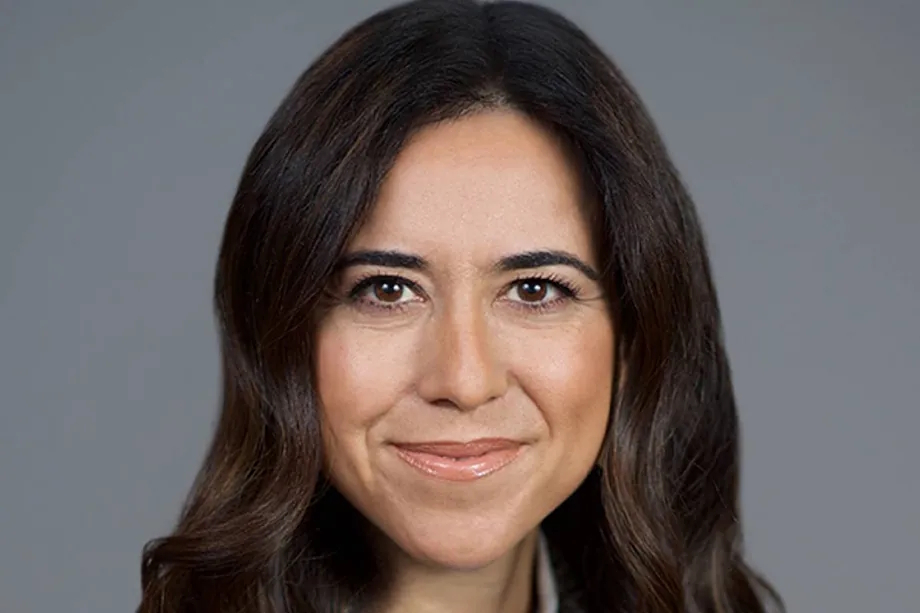
With a statement, the Minister and former Ambassador to the UN of the United Arab Emirates, Lana Nusseibeh, officially launched her candidacy yesterday, seeing a clear opportunity. "I am running for Secretary-General because I believe this is the moment to act with greater urgency: to act sooner, to unite people by overcoming differences, and to drive the work until it produces concrete results," she stated. "It is clear that today we need a Secretary-General who can reaffirm their commitment to the future of multilateralism and the future of the United Nations as a problem solver, rather than a mere spectator of global crises," she added.
Sheikh Mohamed bin Zayed Al Nahyan officially submitted the candidacy in a letter addressed to the Presidents of the UN General Assembly and Security Council, highlighting Nusseibeh's experience within the organization, "her good judgment in addressing current international challenges, and her track record of constructive work." If she garners support, she would become the first woman to lead the UN and the second from the Middle East, following Egyptian Boutros Boutros-Ghali. "I think it would be great if the next Secretary-General were a woman, but I am not running because I am a woman; I am running because I am stubbornly optimistic about the future of the United Nations and believe we need someone who is tireless in seeking diplomacy to open doors," the candidate told Reuters last night.
Her candidacy was not a surprise. The election process is very open and flexible. Anyone interested in the position can apply, campaign, be interviewed by delegations, and present their arguments. Over months, the Security Council conducts what is known as "straw polls," small internal votes where they indicate whether they support, reject, or do not express an opinion on the candidate at the moment. Over time, it is expected that those with less support, or those who are likely to be vetoed by any of the five permanent members of the Council (Russia, China, US, France, and UK), will withdraw. Until only one candidate remains (with at least nine out of 15 votes and no veto), whose appointment must be ratified by the General Assembly.
The latest straw poll, a few days ago, had once again placed Grynspan at the forefront, but it was noted that she, like all the others, had at least two vetoes. This led Senegal's Sall to withdraw. The feeling among diplomats was that perhaps those vetoes were not an insurmountable obstacle and that if other candidates stepped aside, a consensus could still be reached. However, the option of a dark horse was always very present. The United States is heavily involved in the process and did not truly favor any of the options. They were either too left-leaning, too close to China, or, above all, not enthusiastic enough about the Trump administration.
In September, strong contenders in the corridors included the Dutch Sigrid Kaag, who served as an Under-Secretary in the institution and is also part of Trump's Peace Board. Nusseibeh herself. Or the Serbian Vuk Jeremi, who nearly secured the position 10 years ago. And at least one of them is ready.
Nusseibeh has indicated that during the General Assembly, several delegations urged her or encouraged her to take the leap. Few in Manhattan believe she would have dared without explicit support from the White House and almost total certainty that Russia, in increasingly better relations with Washington, would not veto her. And if that were the case, no one believes that France or England would do so, explain sources within the organization. China, although it has significantly increased its influence in the institution over the last decade, operates at a different pace, and experts have long maintained that it was showing flexibility towards the future. What Moscow, Beijing, and Washington seem to be seeking is someone who does not interfere too much, who eases off on human rights issues in certain parts of the world, and does not antagonize the major powers.
This places the Minister in a favorable position. However, her aspirations come at a delicate moment due to her government's involvement in the war in Sudan, supporting and arming the Rapid Support Forces, which were sanctioned and condemned by Donald Trump just a few months ago. Reports from the UN Fact-Finding Mission and Human Rights Watch have documented that networks linked to the United Arab Emirates provide drones, weaponry, logistics, and the arrival of Colombian mercenaries to the RSF, involved in mass killings, violations, and crimes against humanity in Darfur.