The Government of France has confirmed the first documented case in humans of the Shamonda virus (SHAV), following the death of a patient with severe immunosuppression in Lyon. The Ministries of Health and Agriculture of France have communicated that, based on the available knowledge, there is no identified health risk for the general population, classifying this event as an exceptional case.
Every time a new virus emerges, there is a certain concern in the public opinion, especially after the experiences of recent years with other health crises. But international authorities insist that at this moment there are no reasons for alarm: the biology of the virus and the specific circumstances of the case drastically limit its danger to citizens. This is what we know so far:
What is the Shamonda virus and what is its biological classification?
Shamonda is a single-stranded RNA virus that belongs to the Orthobunyavirus genus and is part of the Simbu serogroup, which includes other known livestock pathogens in Europe, such as the Schmallenberg virus (SBV) and the Akabane virus (AKAV).
According to epidemiological records collected by the US CDC, the virus was first isolated in cattle in Nigeria in the mid-1960s. Before its detection in the European continent in 2026, its documented circulation was limited to sporadic reports in regions of West, East, and Southern Africa, as well as in Japan. Until this October, there were no records of infection by this virus in humans.
The Shamonda virus is a vector-borne pathogen. It is not transmitted through direct contact between animals or from animals to humans, although vertical transmission from mother to fetus during gestation has been described, and there is no evidence of transmission through the consumption of food such as meat or milk.
Transmission occurs through the bite of hematophagous dipterans of the Culicoides genus (biting midges or mosquito vectors), although the European Centre for Disease Prevention and Control (ECDC) indicates that the specific mosquito species involved in this case is still unknown. These insects act as essential biological vectors for the replication and spread of the pathogen. They are the same type of environmental vector responsible for the transmission of other livestock diseases, such as bluetongue, epizootic hemorrhagic disease (EHD), or African Horse Sickness.
In Europe, biting mosquitoes are usually more active from spring to autumn, with seasonal patterns that vary depending on the species, location, and climatic conditions. Due to the decrease in temperatures, the activity of most biting mosquito species is decreasing on the continent, as indicated by the ECDC.
How did it reach Europe and what is the situation in Spain?
During the summer of 2026, veterinary surveillance systems unexpectedly detected an outbreak of atypical symptoms in farms in Switzerland and Germany. Genomic sequencing identified a new variant adapted to the continent, named Shamonda-Europe. Scientific research has shown that this European variant has split into two distinct lineages: genotype 1 (SHAV-EU1), mainly detected in central and southern European regions (Switzerland, France, Austria), and genotype 2 (SHAV-EU2), located further north (Belgium, the Netherlands, and Germany).
Regarding Spain, the spread has been rapid. The Ministry of Agriculture, Fisheries and Food (MAPA) confirmed the official entry of the virus through the Central Veterinary Laboratory of Algete. So far, genotype 1 has been identified in cattle farms in Córdoba, Toledo, Ávila, and Madrid, while recently genotype 2 has been isolated in a cattle farm in Cantabria, demonstrating that both branches of the pathogen are actively circulating on the peninsula.
France is one of the countries with the highest number of detections, and its situation is particularly relevant for Spain due to proximity and the volume of animal movements between both countries. As of September 29, the virus had been identified in 51 French departments, mainly in cattle and in some cases in sheep. On September 30, the first case in horses was detected in the Hérault department.
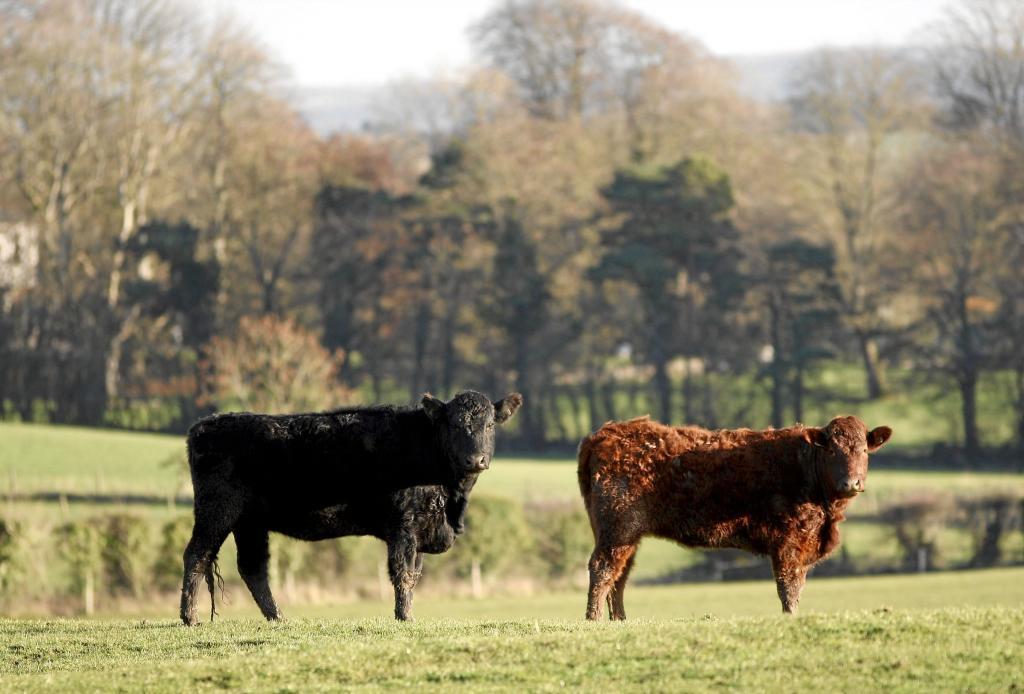
Bovine cattle are the most affected. Acute infections can mainly present with fever, decreased milk production (between 10 and 20% for 7-10 days), and diarrhea.
In affected farms in Switzerland, an approximate duration of 14-21 days of the clinical episode has been described. Possible reproductive repercussions in pregnant females have also been reported, as the virus can cross the placenta and infect the fetus, leading to abortions or severe fetal malformations.
It can affect up to 100% of the farm, although most adult animals seem to recover. So far, no mortality directly attributable to the virus has been observed.
Other species seem to be susceptible to infection, such as sheep and goats (without apparent clinical signs) and horses (where neurological signs have been described, although a causal relationship has not been proven at the moment).
What do we know about the deceased human case in France?
The patient was a man who was hospitalized at the Hospices Civils de Lyon (France) due to a very serious pre-existing condition that caused severe immunosuppression. During his hospital stay, the patient developed acute neurological and cerebral complications that led to his death earlier this month.
"According to the investigations carried out so far, the cerebral complications observed in the immunocompromised patient before his death were very likely related to the Shamonda virus infection," state the French authorities.
The main epidemiological hypothesis is that the patient was bitten by a mosquito of the Culicoides genus carrying the virus in the eastern region of France, an area where veterinary samplings had already confirmed intensive circulation of Shamonda in animals during the spring and summer.
Clinical, laboratory, and epidemiological investigations are ongoing to determine if the virus caused or contributed to the patient's death and how the infection occurred, in collaboration with the World Health Organization (WHO) and the ECDC. "Investigations are being conducted to determine if the virus caused or contributed to his death and how the contagion occurred," the ECDC points out.
Is there a risk for the general population?
The ECDC confirms that the deceased is the first case of transmission to humans, as it is a disease that had only affected animals until now. "With the current knowledge about the virus, no risk to the health of the general population has been identified to date," emphasize the French authorities.
What control measures have been activated?
Regarding livestock, there is currently no vaccine against the Shamonda virus, so prevention and control measures should be based on adopting measures against the vector Culicoides, including the use of repellents and insecticides, along with symptomatic veterinary treatment in affected animals.
Regarding people, the French government has officially notified the WHO and the ECDC. The Shamonda virus is not currently classified as a harmonized mandatory notifiable disease in the European Union, so it does not entail automatic trade restrictions or limitations on the movement of livestock.
The ECDC has stated that it is in contact with French authorities and European partners to investigate the potential public health implications of this first case of human infection. The European agency is closely monitoring the situation in close collaboration with the European Commission and the European Food Safety Authority (EFSA), which oversees animal health and food safety across the EU.
The Centre has indicated that it is working with the relevant EU Reference Laboratory to strengthen testing capacity and provide additional support to Member States in identifying any other potential cases.