The map showing the locations in the Iberian Peninsula where Neanderthals lived expands: this hominid species also inhabited the territory now occupied by Navarra.
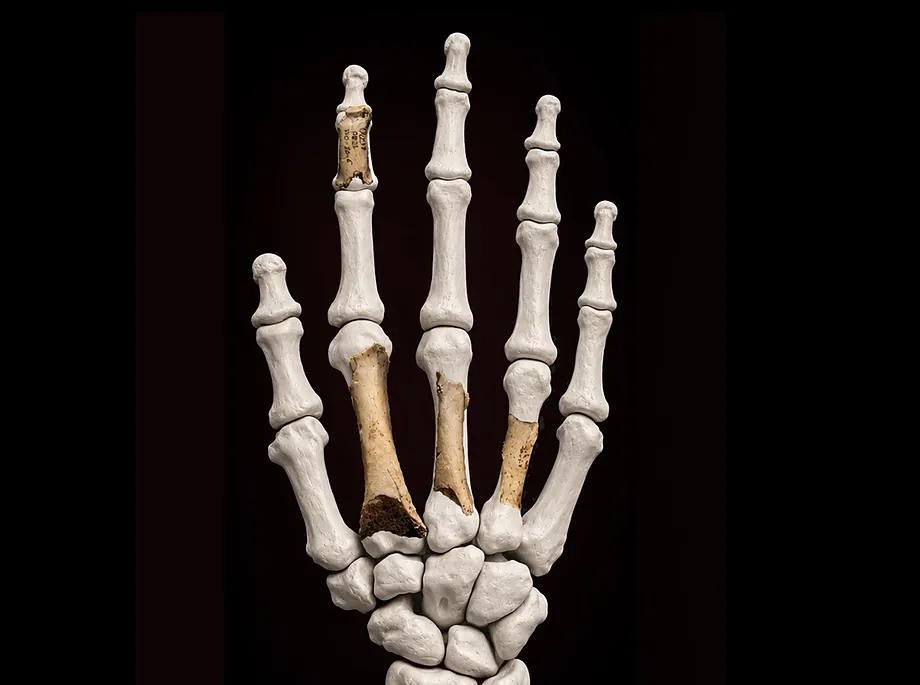
This is demonstrated by the discovery in the Abauntz cave of the bones of a hand that also preserve DNA. As explained by its discoverers on Monday, six bone fragments corresponding to the right hand of a male have been found. The remains are in an excellent state of preservation, allowing researchers to conclude, through direct carbon-14 dating, that the individual lived 46,000 years ago.
This discovery, according to the authors, "opens new perspectives for studying the populations that inhabited the western Pyrenees before their disappearance."
Until now, Navarra was a territory practically unknown regarding the fossil record of these hominids who coexisted with Homo sapiens, but for reasons still debated by the scientific community, they became extinct around 40,000 years ago, although some populations survived longer.
According to the study, despite numerous archaeological evidence of their presence in the western Pyrenees, human remains directly attributed to this species had not been identified until now. The remains presented on Monday at an institutional event with the presence of the Navarre Government were discovered during two excavation campaigns in the Abauntz cave, located in Arraitz-Orkin, in the Ultzama valley (Navarra).
"For the first time, we have human remains that allow us to directly identify the presence of Neanderthals in Navarra. This discovery fills an important gap in the paleoanthropological record of the western Pyrenees and opens new possibilities to investigate the populations that inhabited this region during the final stages of Neanderthal history," explained in a press release Andion Arteaga, project co-director and researcher at the Centre of New Technologies of the University of Warsaw (Poland) and associated researcher at the Catalan Institute of Human Paleoecology and Social Evolution (IPHES-CERCA).
Among the details of the discovery, scientists have highlighted the presence of bite marks produced by carnivores, "evidence that provides information on the processes that affected the bones after the individual's death and the circumstances of their accumulation in the cavity."
In addition to the fossils, stone tools and animal remains have been recovered, some of which bear marks suggesting they were processed and consumed by the cave's inhabitants.
Furthermore, scientists emphasize that the recovery of DNA will allow them to understand kinship relations, social organization, and the evolutionary history of Neanderthals, as has been done in other sites in the Iberian Peninsula where Neanderthals lived, such as El Sidrón in Asturias.
"Having been able to recover ancient DNA and obtain direct datings of the fossils is especially relevant. This combination provides us with an exceptional basis to study the biological characteristics of this individual and delve into the relationships between the Neanderthal populations that occupied this part of Europe," highlights Mikel Arlegi, research co-director, in statements collected in the press release.
The Abauntz cave where this Neanderthal population lived is located in a natural passage zone between the Iberian Peninsula and the rest of the European continent, which, as the authors emphasize, "makes the site particularly interesting for investigating the mobility and possible connections between the human groups inhabiting the territories on both sides of the Pyrenees."