Hello Kitty has become the latest target of Chinese nationalism. The sin of the pink-bowed kitty has been appearing disguised as a spy in a collection of plush toys inspired by a popular Japanese television series.
The controversy has reached such magnitude that the Global Times, a newspaper of Beijing's propaganda apparatus, dedicated an editorial with a striking title: "Hello Kitty should not dance with the Japanese right". The company behind the character has already apologized and canceled its commercial collaboration.
The controversy revolves around Vivant, a Japanese spy series whose second season features Chinese agents brutally torturing a Japanese spy. In some scenes, they cut off his fingers. Chinese media have accused the producers of manipulating history by attributing to Chinese characters atrocities similar to those committed by Japanese troops during their invasion of China last century.
The controversy has directly affected Sanrio, the company that created Hello Kitty, which had launched a collection of dolls (both Hello Kitty and other popular characters) dressed as the spy protagonists of the series. On Wednesday night, the company issued an apology and announced the cancellation of all commercial initiatives related to Vivant.
Calls for a boycott campaign were already underway in the Asian giant, and it is understandable that Sanrio yielded to pressure considering that China is one of its main international markets. "The company risks losing something more valuable than sales: the trust of millions of Chinese consumers," read the editorial from Global Times.
Other Chinese media have noted that the controversy is particularly sensitive as it comes at one of the tensest moments in relations between Beijing and Tokyo. Since November 2025, when Japanese Prime Minister Sanae Takaichi suggested that her country could intervene militarily in response to a Chinese attack on Taiwan threatening Japanese security, both governments have maintained a constant diplomatic clash.
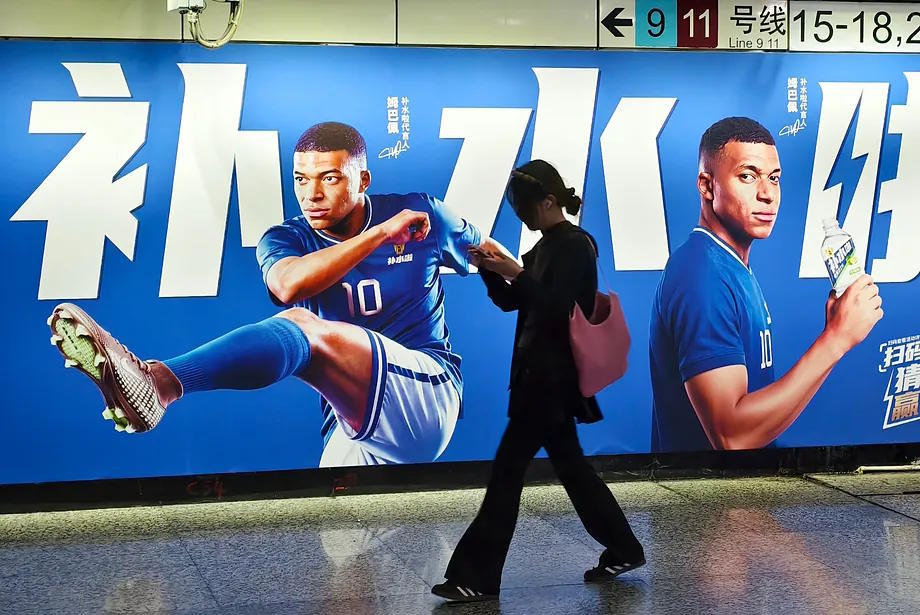
Editorials targeting Hello Kitty have practically overlapped with those criticizing another international celebrity who discovered this week the price of offending China. Kylian Mbappé, the star of Real Madrid, has gone from being one of the country's most recognizable advertising faces to becoming the target of a furious boycott. All because the French forward referred to Mao Zedong as a "Chinese dictator" while joking in an interview about a montage that mixed his face with that of the founder of the People's Republic.
The reaction was swift. Several Chinese companies have terminated their commercial contracts with the star. State television announced the suspension of LaLiga broadcasts and removed advertisements featuring the player. Some platforms blocked the forward's accounts. Mbappé apologized on Tuesday. LaLiga also issued an apology, and on Wednesday, Real Madrid itself did, expressing its respect for China and its citizens. Even that has not guaranteed the end of the punishment.
These Chinese outbursts have repeated over the years with different protagonists. In 2018, the Italian brand Dolce & Gabbana suffered one of the most notorious commercial boycotts after publishing ads in which a Chinese model attempted to eat pizza and pasta using chopsticks. The campaign was denounced as racist and ended with the cancellation of a major fashion show in Shanghai. E-commerce platforms removed their products, and the two founders had to record a video apologizing in Mandarin.
A year later, the NBA discovered that American sports were not safe either. Daryl Morey, then an executive of the Houston Rockets, posted a message supporting pro-democracy protests in Hong Kong. Chinese state television suspended broadcasts, Chinese sponsors withdrew, and the league became trapped in a crisis that its commissioner, Adam Silver, estimated at around $400 million.
In 2021, the boycott extended to H&M, Nike, and Adidas for questioning labor conditions in the cotton industry of the Xinjiang region, where international organizations have reported abuses against the Uyghur Muslim minority. The brand's products disappeared from major Chinese platforms, and even its stores were removed from some map applications. Sales in the country fell by 23% in the March to May quarter of that year.
On other occasions, Versace, Coach, and Givenchy have also had to publicly apologize for designs that appeared to present Hong Kong, Taiwan, or Macau as independent countries. Any ambiguity that questions the official interpretation of Chinese sovereignty can turn into a commercial crisis.
All these campaigns consistently follow the same recognizable pattern. First, outrage erupts on social media. Then state media intervene, turning the controversy into a matter of national pride. Finally, local companies terminate contracts, and foreign multinationals rush to apologize before the fire reaches their balance sheets. First it was Mbappé. And now it has fallen to Hello Kitty.