Michelle Burchill works for Yavapai County in Arizona. She is a register, the officials responsible for managing some administrative and electoral matters. In that area, for example, they handle voter registration, enroll citizens in the census and keep it updated, manage mail-in voting requests, or respond to questions about their registration. Last Friday, desperate, she turned to the county's social media with a message to her neighbors: "ATTENTION VOTERS!: The president is NOT on the ballot. We are receiving many calls asking why that election is missing. Also, we cannot count hair combs, gift cards, to-do lists, tax bills, or anything that is not a Yavapai County Ballot. Happy voting!".
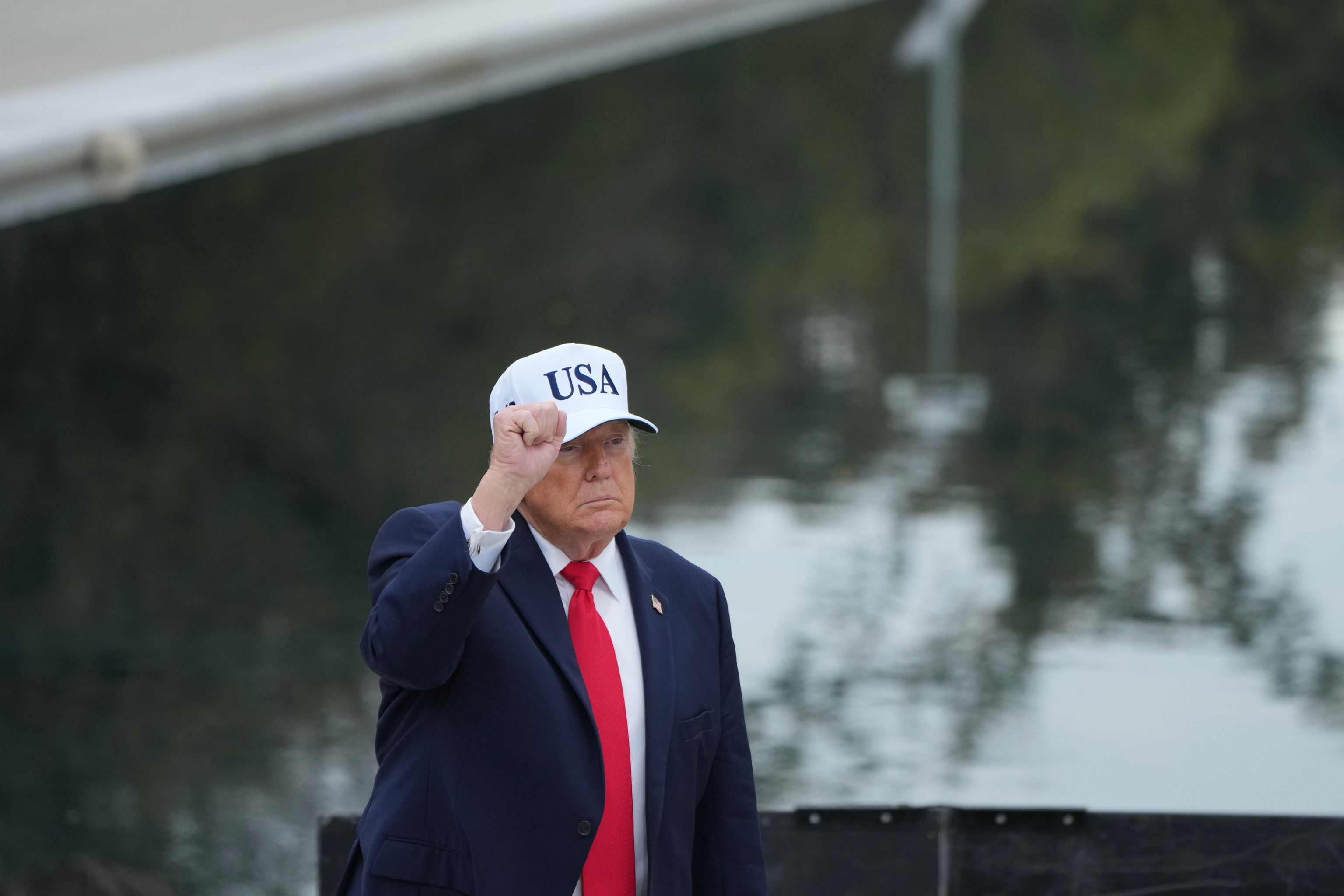
For the past three months, Donald Trump has urged his supporters to go to the polls imagining that he is on the ballots. He has said it over and over again, at rallies from coast to coast, explaining that his name would not appear but that they should act as if it were. The president is convinced that he is all-powerful, that he has won every election he has run in (including the 2020 election, which he lost), that the country reveres him almost without question, and that if these midterm elections become a referendum on him and his management, rather than on state or local issues, victory is assured.
However, the polls indicate that Republicans are going to suffer a resounding defeat and that there is a very high possibility that they will lose control of both chambers of Congress. That they are indeed becoming a referendum on him, but also on the cost of living, on corruption. And that the outcome is not what he expects. A month ago, it was taken for granted that the House of Representatives would change hands but that the Senate would be very difficult, as Democrats need to hold all their seats and take no less than four, most of them in very Republican areas. Now, however, the left believes we are on the brink of a 'blue wave' and that they can achieve a huge majority.
The reason is Trump, with the lowest approval rating since he entered politics. American media have been collecting anonymous testimonies from congressmen, senators, and their teams for weeks saying that the president's presence, his speeches and messages have become toxic and hurt them greatly. Candidates cannot run their campaigns appealing to what they know works well with their electorate, but are forced to follow Trump's script and, above all, defend his management. Defend the Iran war, despite it having driven up the price of gasoline and diesel. Defend the tariffs, despite their enormous repercussions in their states on food prices and damage to businesses. Defend immigration policy, ICE, and deportations, even though they have generated anxiety and terror in their counties, killed American citizens, or left many fields and factories without labor. Defend even wanting him to run again in 2028, knowing it is unconstitutional.
Conservative congressional candidates make awkward faces when Trump blames the public, at events alongside them, for complaining about the cost of living. When he blames ranchers, in states like Kansas or Texas, for not lowering the price of beef and not helping enough. When he literally says he couldn't care less about the rising price of gasoline and the suffering of families. "Our country is making hundreds of billions of dollars because of what's happened in the Middle East, because they are coming to Texas, Oklahoma, and Louisiana to take that oil. (...) My people said 'please don't mention that sir, because people are paying a little higher. I said I don't give a damn I'm gonna say it: We're making a freaking fortune.", he boasted in Georgia just a few days ago.
The midterms are almost always very bad for the party that controls the White House. It is common for them to lose six or seven points. Only twice in the last 50 years has this trend been broken. It happened during Trump's first term and will happen again. But this time it seems to go even further. The MAGA leader has bet everything on his recurring obsessions and the culture war. Islam, immigrants, transgender issues. Ignoring the daily reality of millions of people who have lost health insurance because they cannot afford the increases. Who cannot make ends meet.
The polls, technically corrected in this edition because in the past they tended to overrepresent progressives, indicate that Democrats will be able to achieve a Senate majority by bolstering victories in states that just two years ago Trump won by margins of 15 or 20 points over Kamala Harris. If we analyze the details, Trump is behind specific and personal decisions that provide even more context. For example, when he chose JD Vance as vice president, he had to leave his position as senator in Ohio, which he had held for less than two years, opening the door to a tight special election this year that the Republican Party could lose. The state's governor appointed John Husted, who actually wanted to run for governor and may now lose that position. And the chosen one to try to be governor, another staunch Trump ally, may lose due to an indefensible ad against his rival using his mother, a woman who lost custody 40 years ago after fleeing with her second husband, accused of sexual abuse. Only Trump has defended the ad and that mother.
In the summer of 2025, Senator Thom Tillis of North Carolina broke with Trump by voting against his major fiscal and budget project, the Big Beautiful Bill. Trump threatened to support a rival in the primaries, and Tillis announced shortly after that he would not run for reelection. Instead, Trump enthusiastically supported Michael Whatley, an ally who polls show is 10 points behind his Democratic rival. The same happened in Texas, where Trump ousted Senator Cornyn for not being loyal and enthusiastic enough and supported, among all alternatives, the worst possible option, Ken Paxton, the attorney general who had previously been removed by a party-supported impeachment for corruption. And indirectly also with candidates in Georgia or South Carolina, where his bet on the sister of the late Lindsey Graham, a woman with no political experience or assets beyond her last name, divided and weakened the party.
Americans head to the polls today after having broken records for early voting and mail-in voting. Perhaps due to greater mobilization, perhaps out of fear that there will be problems or incidents at polling places. With rumors of an imminent attack on Iran or possible reprisals and attacks on U.S. soil. With fears of lawsuits, problems in certifying results, that there will be candidates who do not accept their defeat. Or that the White House wants to put up obstacles. Fear of incidents, of disturbances. With figures from the MAGA world talking about civil wars or World War III. With messages on social media encouraging people to stock up on supplies for several days at home.
Trump framed these elections as a gamble, which carries a risk. In these two years, he has governed as if he had absolute powers and was unstoppable, without real opposition, ignoring Congress and pressuring the courts. Assuming that his influence and shadow were enough to fulfill his wishes, but it is not the same to appoint candidates as it is to turn them into winners. A defeat will not only be interpreted as a punishment for his management but, above all, a signal of the wear on his leadership and a warning that a significant portion of Americans who brought him back to the White House are very dissatisfied with the direction of the country. Instead of reinforcing his mandate, his legend, the midterms will measure the limits of his political power. Trump is unique; he has immense power and unprecedented control over his party. On Wednesday, he will find out if he is also mortal, like his predecessors. A lame duck.