"My faith is the center of my life and it guides me in my public service, it guides me in how I live my life and how I see my life." "I dislike anything that smells of fundamentalism, whether religious, political, or ideological." "I believe that life is a blessing, but also a test."
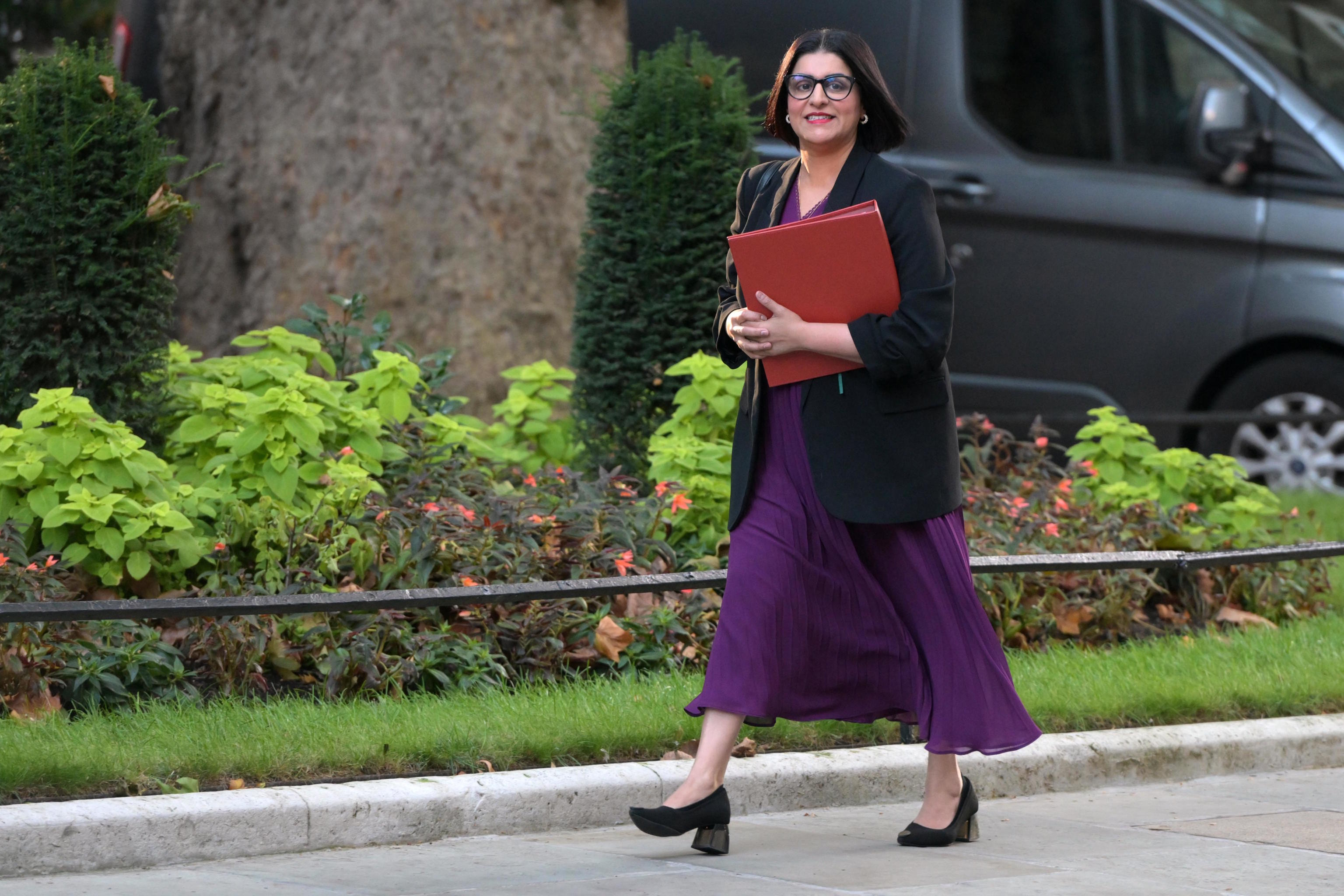
Being somewhat cynical, one might think these phrases belong to the Isabel Díaz Ayuso of the UK. But no. The speaker is neither conservative nor Christian, but Muslim, raised in the UK and Saudi Arabia, and daughters of Pakistanis. She is the Home Secretary, Shabana Mahmood, one of five ministers who have retained their positions under the current British Prime Minister, Andy Burnham, from his predecessor, Keir Starmer.
With Burnham, this 46-year-old lawyer has become what Starmer wanted - and failed - to be: the battering ram of British labor to try to win the debate on illegal immigration. The former Prime Minister lost his position before Mahmood could develop significant political initiatives. And so it was that this Monday the Home Secretary fought her biggest battle to date, by informing the House of Commons of the reform of the Regulation developed from the Immigration Act of 1971, which establishes a minimum period of five years - in addition to other requirements - for an immigrant to apply for permanent residency in the UK. From now on, it will be 10 years. And, in some cases of immigrants who entered the country illegally and then applied for asylum, up to 30 years.
All changes are applied retroactively. That is, someone who has been an immigrant for, say, three years and meets the requirements for residency will have to wait seven more, instead of the two they would have under the current system.
The measure had already been announced a year ago, with Starmer as Prime Minister. But with her communication to the House, Mahmood specifies it. Although theoretically Parliament could block it, the chances of that happening seem remote, as Mahmood has conceded enough to deactivate that option. This has translated into the softening of a series of points. The most important: the maintenance of the five years for around 280,000 immigrants and their dependents who work in the health and care sector, earn more than £25,000 gross annually (€30,000), and arrived in the country after Covid-19.
The change is not just pragmatism: it shows that the UK cannot function without immigrants, but also demonstrates that British society cannot function without immigrants. These workers arrived in the UK - or changed their visa - before May 2025, when the country's healthcare system was at maximum capacity due to the combined effects of the aftermath of the Covid-19 pandemic and Brexit, which had forced the emigration of health professionals from the European Union.
The result is that much of the staff working in hospitals and health centers in the UK is not blonde or blue-eyed. And, as Mahmood made sure to remind the opposition, a large part of that quarter million people - to which their families must be added - arrived in the British Isles or changed their immigration status while the tories were in power. After all, the large wave of immigrants that the country has received is colloquially known as 'Boris's wave,' referring to the Prime Minister who designed it: the conservative Boris Johnson.
Precisely, the reform goes against the conservatives and the ultranationalists of Reform-UK, the party of Brexit ideologue Nigel Farage, who competes for the primacy of the right. With it, Prime Minister Andy Burnham aims to polish his credentials among low- and middle-income voters who have abandoned labor en masse due to its immigration policy.
The losers are the left-wing labor members, who have not hidden their rejection of the reform. The Deputy Prime Minister, Angela Rayner, has stated - in a break from the official line of her own government, which would be unimaginable in Spain but is totally normal in the UK - that what Mahmood is going to do is "un-British" and "a game changer."
For Mahmood, those criticisms are likely irrelevant. After all, she is used to being called "fu***ing P*ki"" ("P*ki," referring to Pakistanis, is extremely offensive in the UK), so she has difficulty accepting moral lessons on that front. Her reform is also a success for Burnham, who consolidates his image as a reformist and his strategy to win votes from both the right and the left. In a country like the UK, where, according to an Ipsos poll, 55% of the population believes there are too many immigrants, that is a policy that seems destined to win.