At the Yangshan port, off Shanghai, a forest of gigantic cranes rises over the East China Sea, moving containers stacked like pieces of an immense construction game. Cargo ships depart for Europe carrying batteries, machinery, and solar panels. At a nearby terminal, thousands of cars await shipment to European ports. This is the China shock 2.0 that Europe is experiencing: the trade shock with the Asian giant that goes far beyond cheap clothing, basic technology, and affordable labor from the early 21st century. That was shock 1.0. But the second part is a completely different story. It is a trade impact in which the Asian country is not only competing but displacing a significant part of the European tech industry. A fundamental issue of this trade shock is China's overcapacity: the country is flooding Europe with its products while importing much less than it exports. Along the way, there is also a potential voluntary devaluation of the yuan, public subsidies, and a crisis in local private consumption in the Asian giant. The EU is desperately seeking ways to cope with this complex situation that directly affects Germany, the country that has traditionally been its economic engine.
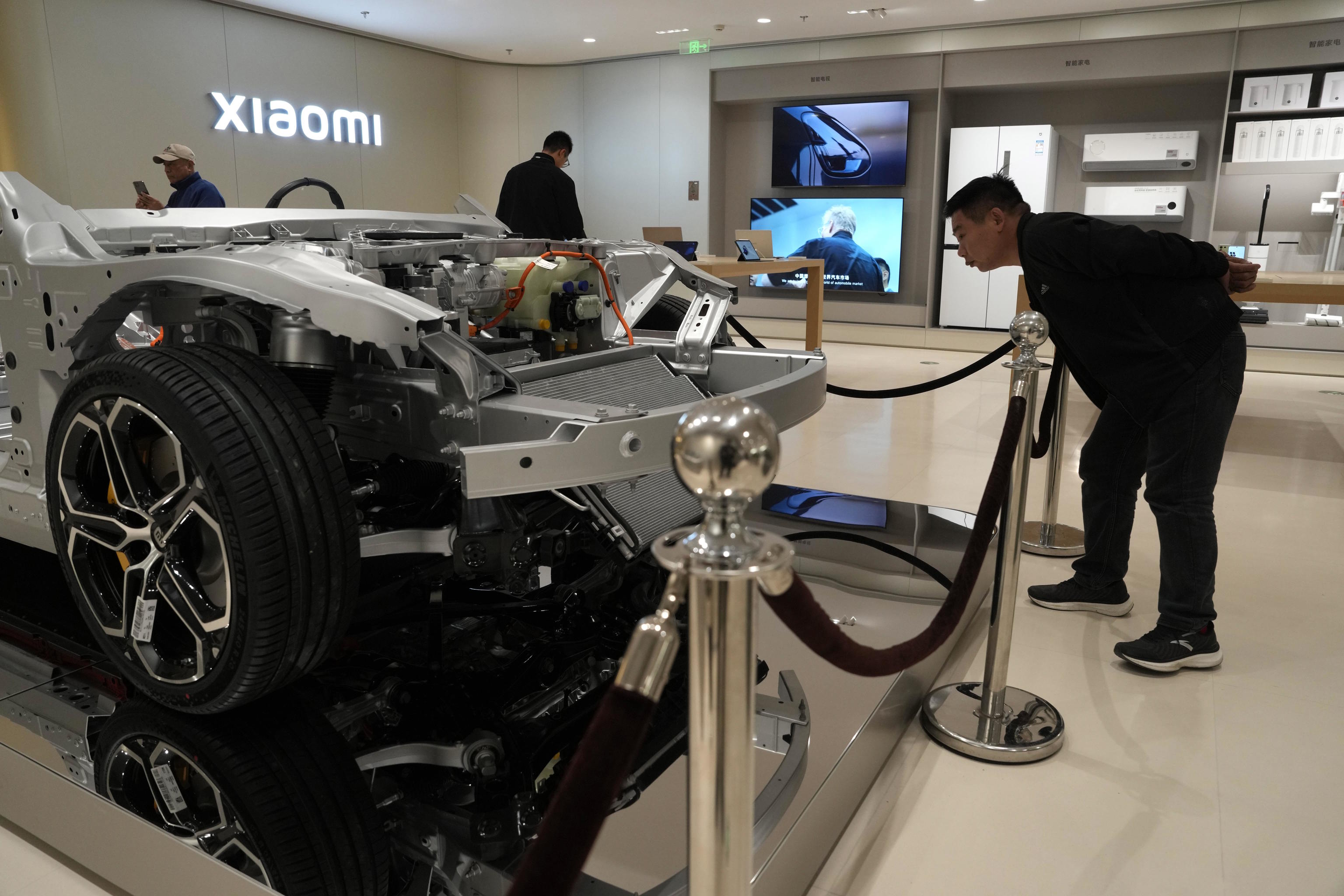
"China artificially keeps the yuan below what market fundamentals would determine to gain competitiveness abroad. These are issues that, if trade defense instruments are well designed, can be addressed. But then there is another part that is inherent to the Chinese market itself and does not stem from anti-competitive practices: China has a market of 1.4 billion inhabitants, which allows it to benefit from economies of scale that we do not have in the European Union," explains Judith Arnal, a researcher at Fedea and the Elcano Institute. "And there is something inherent to the very economic structure of China, accentuated by its crisis situation: Chinese private consumption is very low, representing around 40% of GDP, while in the United States it represents almost 70% of GDP and in the EU, around 55%. For these trade imbalances to reverse, private consumption would have to rise from 40% to over 50% of GDP. But as there is currently a real estate crisis in China that translates into a financial crisis, this leads households to consume less," adds Arnal, who recently published the extensive report From Imports to Factories: the EU and Spain Facing China's New Challenge at Fedea. Because while BYD, MG, and other competitors gain ground in Europe, demand is cooling at home. Cui Dongshu, secretary general of the China Automobile Association, has just presented a worrying forecast: national sales could plummet by 22% this year. The excess industrial capacity and fierce price wars among Chinese manufacturers make selling abroad increasingly necessary. Precisely when Brussels is raising new barriers to protect its companies. The EU is trying to address this situation in various ways. First, through dialogue, as did Trade Commissioner Maros Sefcovic this month by going to China and securing an agreement that, at first glance, is positive. Surprisingly positive: Brussels imposed a limit on the import of Chinese hybrid cars to 350,000 units per year, down from the 800,000 currently arriving. The figure will grow by 6% annually and does not include electric vehicles, but even so, the agreement reached by the Commission has been viewed positively.
"We are far from the end. It is a crucial step, but only a first step in the rebalancing process," said the head of the community executive, who emphasized the "understanding" reached between Brussels and Beijing. However, many in Europe are wary and think that the Asian country has held back something. Beijing, however, released a very different interpretation: the agreement references imports from 2025 and includes annual increases, which would still allow its manufacturers to expand sales. "By reaching an agreement that allows exports to continue growing from the actual volume imported by the EU in 2025, China has secured the greatest possible export benefits for its manufacturers," asserts Chen Jingjing, secretary general of the automotive branch of the China Chamber of Commerce for Import and Export of Machinery.Zhou Mi, a researcher at the Chinese Academy of International Trade, argues that the pact recognizes a reality that Europe can hardly ignore: "It still needs imported vehicles, especially hybrids, and hindering purchases from China would complicate meeting that demand."
Back in Brussels, the EU also has trade defense instruments such as the solidarity mechanism among member states designed to counter China's bilateral pressures on specific sectors of certain countries. Brandy in France or pork in Spain, to name a few. There is also the diversification of suppliers or the anti-coercion mechanism, known as the trade bazooka, which allows the EU, provided it is approved by a qualified majority of countries, to take economic reprisals against third states. In Chinese economic circles, there is also particular concern that Brussels is preparing a much broader offensive than the one focused so far on electric vehicles. Zhang Mengting, an analyst at Caixin, one of the country's most influential economic media, warns of the risk that Europe will extend its defensive mechanisms to entire industries and even more generally limit Chinese companies' access to its market.
But in Europe, it is difficult to shake the feeling that all these actions barely serve to help the EU mitigate shock 2.0. In no case to reverse it. Moreover, a fundamental aspect is missing: competitiveness and the internal market. The fragmentation represented by the 27 countries that make up the EU makes it very, very difficult to compete with China or the United States in this area. The never-ending story in the Union. And while Brussels tries to digest all this, just around the corner is shock 3.0: that of artificial intelligence. And here, Europe is not just facing the emergence of China; it is far behind the Asian country. "We must give up the battle for foundational AI models, where we are very behind compared to OpenAI or Anthropic, and focus on sector-specific AI models specialized in healthcare, public administration, and industrial services," Arnal continues.
In cutting-edge technology, and therefore also in aspects related to artificial intelligence, China has begun to protect its technological advantages using tools similar to those that the West has employed for years to defend itself against it. In mid-month, it proposed export controls for 40 technologies. Among the targets are advanced AI models, certain biomedical technologies, and a dozen essential processes for manufacturing solar components. The list includes techniques for producing silicon wafers and photovoltaic cells, a technology that promises to significantly increase the efficiency of panels.
The official argument is national security. But after investing for decades in developing its own capabilities, China aims to prevent some of its most valuable knowledge from feeding future foreign competitors. The message received by its trading partners seems quite clear: Beijing wants to continue selling solar panels but not necessarily share the knowledge that allows them to be manufactured. For Spain, which has become one of the major European powers in photovoltaic energy, this distinction is important. Although the country already manufactures more than 60% of the components in the solar value chain, according to the Ministry for Ecological Transition, it continues to depend on foreign suppliers for certain industrial links. If Beijing further restricts the transfer of the necessary procedures to produce wafers or solar cells, Spanish projects that require those technologies could face higher costs, delays, and difficulties accessing specialized machinery and knowledge. The maneuver comes after the British government rejected the use of its turbines in offshore wind projects for national security reasons. Spain appears again in this dispute. In May, Reuters revealed that Ming Yang was considering setting up a factory in Spanish territory after the British setback. The case illustrates the new internationalization strategy of Chinese multinationals. They now need to produce close to their buyers, hire local staff, and convince regulators that their operations do not represent an extension of Beijing's strategic interests.