The unqualified defeat of President Donald Trump in the midterm elections in the U.S. has triggered massive sell-offs in those global stock giants linked to artificial intelligence amid fears that the more measured Democratic outlook could hinder their growth. But the bleeding has been ongoing. In just the last month, the seven largest publicly traded companies, Nvidia, Alphabet, Tesla, SpaceX, Meta, Broadcom, and Taiwan Semiconductor, have seen their stock prices plummet, resulting in a loss of over 4 trillion in market capitalization. Just the drop of what was until yesterday the largest publicly traded company in the world, the chip giant founded by Jensen Huang, is worth today 1.38 trillion dollars less than on October 6, which has led it to cede the market crown to Apple, which remains above the 5 trillion dollar barrier, also favored by hopes of resuming friendlier trade relations with governments like China.
Today, the big question is whether we are experiencing the pop of the AI bubble or if this is a correction that, from such high levels, scares investors more than usual. Nvidia has lost a quarter of its market capitalization in the last month; similarly, Broadcom, another semiconductor company, is down 22%; and Taiwanese TSCM has dropped 17%.
However, if there is one company that has been at the center of a downward spiral, it is SpaceX, four months after it began its journey on the stock market. Its losses are nearing 30% in the last month, equivalent to over 656 billion dollars less. This amount exceeds the combined value of the four most important stocks on the Spanish stock market, such as Inditex, Iberdrola, and two banks, Santander and BBVA.
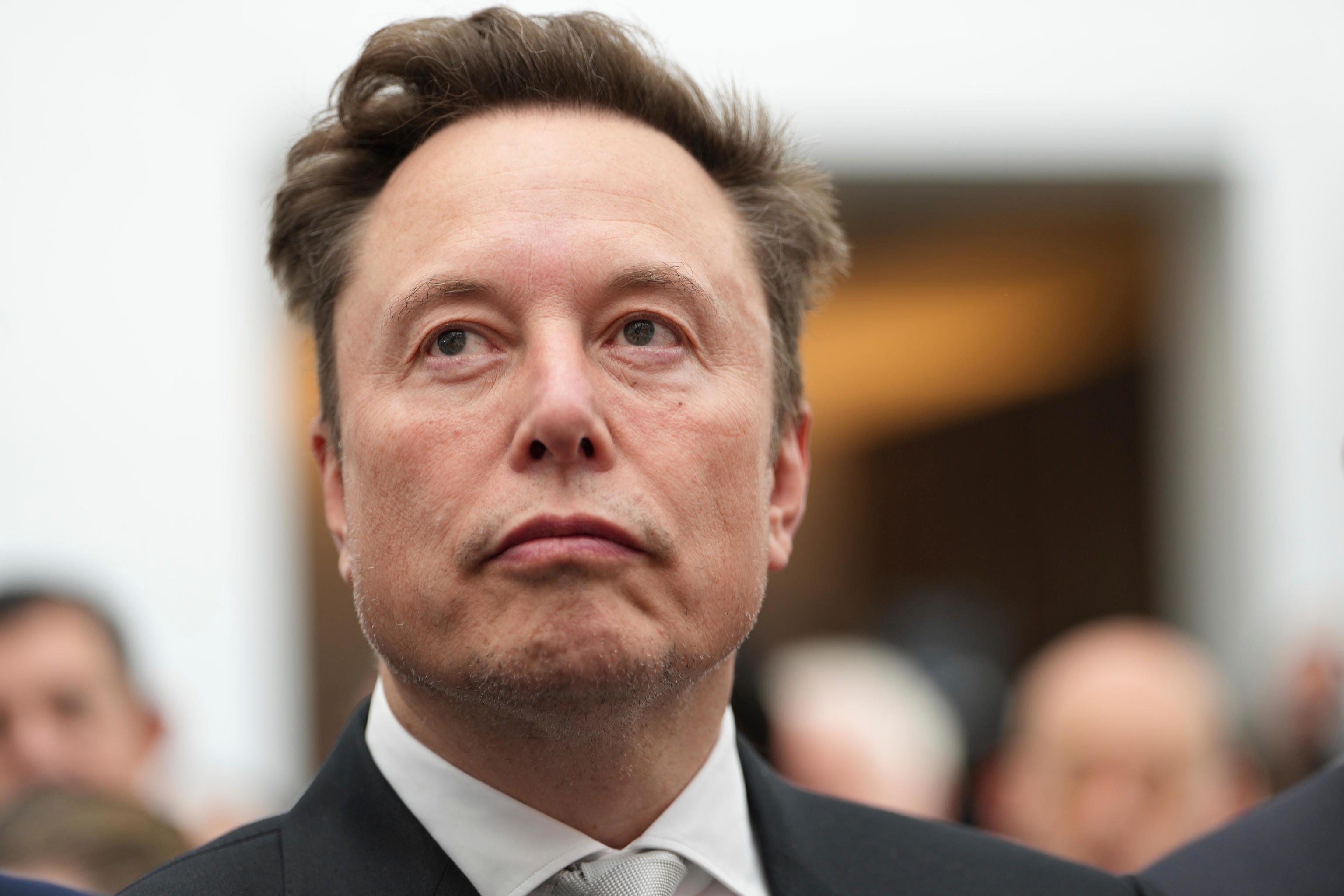
Elon Musk's closeness to the Republican president since his candidacy back in 2024 is taking a toll on his companies in the stock market... and also on his personal wealth. According to the 'Billionaires Index' compiled by Bloomberg, Musk remains the richest man on the planet at 55 years old, with a fortune valued at 785 billion dollars, which is about 255 billion less than in the early days of October. In fact, just in the last two trading days, following the U.S. midterms, his net worth has decreased by 13%.
This amount should be added to the nearly 500 million dollars that the founder of SpaceX, Tesla, and owner of the former Twitter, now called 'X', allocated to groups close to the Republican Party to finance the campaign in favor of Donald Trump and to prevent him from losing key control in the U.S. Senate. Musk surpassed his own record from the previous election campaign two years ago when he spent 290 million dollars.
But the blow to the technoligarchs doesn't stop with Elon Musk. Larry Page, co-founder of Alphabet and the third richest person in the world, has seen his net worth decrease by 50 billion dollars, nearly one-fifth of the 300 billion he had a month ago. Jeff Bezos, president of Amazon, was also one of the visible faces supporting President Trump's administration. Paradoxically, a more open U.S. market towards foreign trade could benefit him. Just in the last month, Bezos has reinforced his second position in the ranking of the richest people in the world, with a 34% increase in his personal wealth, reaching 370 billion dollars.
The tears of billionaires are a shared therapy among the elite of tech magnates. Sergey Brin, the other co-founder of Amazon, has lost another 45 billion dollars; as has Meta founder Mark Zuckerberg, with significant losses, as well as Michael Dell, Larry Ellison from Oracle, and Jensen Huang from Nvidia.
Just yesterday, the renowned 'Philadelphia Semiconductor Index' suffered a 9.2% drop, marking the worst session since April 2025 and capping five consecutive weeks of declines. The shock was such that firms like Nvidia plummeted 7.5% on Thursday alone, also their worst day in a year and a half; Micron Technology fell another 13%, Broadcom 7.2%, Intel over 9%, and Qualcomm another 10%. No one was spared, and this relentless sell-off spread to Asian markets, especially the Taiwan Stock Exchange, where two semiconductor companies have grown so much in recent years that they alone account for 75% of the entire market's capitalization.
For the past two years, artificial intelligence has dominated everything. Cathie Wood, the U.S. tech investment guru and founder of Ark Invest, acknowledged days before SpaceX's stock market debut last June during a visit to Madrid. "AI has taken all the oxygen out of the room", she stated then. And this has two interpretations. The first is that the magnitude of what is called the industrial revolution of the 21st century makes its development and growth unstoppable, encompassing all areas of action in a few years. The second is that this FOMO, or fear of missing out once again on this trend, may have led investors to pay excessive valuations in an effort to get in at all costs on anything that resonated with artificial intelligence. And this is where the stock markets were when the midterms came to finalize an increasingly widespread feeling that perhaps the valuations of these companies were inflated.
"The relevance of this political change lies in the fact that several of the new Democratic governors have campaigned promising stricter oversight of data center development in states like Texas, Georgia, and Ohio, which account for nearly 60% of the capacity currently under construction in the U.S. Among their priorities were the imposition of temporary moratoriums, greater requirements for granting permits related to water consumption, or pressure on electrical grids, that is, greater scrutiny over the economic cost that these projects must bear and how much of these negative externalities can be passed on to households and other economic agents," say analysts from Banca March, who also mention a possible "review of tax incentives and subsidies" that have helped attract large investments from companies like Microsoft, Amazon, Alphabet, or Meta to various regions of the country.
The money allocated to the construction of data centers is nearly double what it was a year ago and already represents 12% of all construction investment in the U.S., excluding only housing. Its weight is becoming increasingly significant.
The rushed push to build infrastructure that provides energy and storage for artificial intelligence companies has led investors to focus on valuations. Is the price being paid too high? It should be noted that many of the largest companies in the sector are operating at a loss, despite having billion-dollar revenues due to the enormous costs and investments they must undertake. This is the case with Anthropic, which, on the verge of its stock market debut, reported historic losses in the semester exceeding 80.7 billion dollars.
Another of the uncertainties surrounding stock markets worldwide is the short-term future of the giant of AI founded by the Amodeis, whether a currently unfriendly climate will cause them to delay their Nasdaq debut scheduled for two weeks from now, still without a date, in which the small Spanish investor was expected to have a piece of the pie in the offering. A key element to consider is the valuation they aspire to. No official figures have been disclosed, but it is known that the goal is to surpass SpaceX and reach a capitalization of between 1.5 and 2 trillion dollars, which represents between 60% and 100% more than in June of this year. Is it reasonable in the current context to pay this for the same company? That is the question.
In this context of distrust towards the multiples at which many semiconductor or cloud infrastructure companies are trading, there have been half a dozen cancellations of IPOs. One example is Firmus Grid, an Australian data center firm backed by Nvidia, which canceled its stock market debut in October with a valuation close to $30 billion. AirTrunk, a data center owned by Blackstone, also postponed its market entry in October. Nscale, a British company expected to play a significant role in Europe's strategic payment independence, aimed for a valuation of $30 billion, but after the cancellation of a million-dollar contract with Microsoft, the market is said to be willing to pay 60% of that amount and no more. Another example that did manage to go public in South Korea is the data center and AI firm Elice, which plummeted 32% on its debut day and has erased its gains in recent sessions.