Sweat had begun to soak the turbans when the grooms started to suspect that something was off. It was over 40 degrees in Dewas, a city in the state of Madhya Pradesh, in the heart of India. In front of the venue where a large collective wedding was supposedly to take place, 42 men dressed for one of the most important days of their lives waited. They had come from villages and small towns. Some arrived on motorcycles; others had rented cars and SUVs to transport parents, siblings, and other guests. They carried flower garlands and metal boxes filled with sweets to distribute after the ceremony. But there was just one small detail missing: the 42 brides.
Hours passed, and none appeared. Those women with whom some had been talking for weeks, but whom they had never seen face to face, would never arrive. Many didn't even exist. The police later reconstructed a scam designed around a particularly valuable commodity in certain rural areas of India: the promise of finding a wife.
A network of intermediaries located families whose sons had been trying to marry unsuccessfully for a long time. They knew exactly whom to target. Men from modest backgrounds, with few economic prospects, precarious jobs, or belonging to communities where the pool of potential brides is limited by caste, religion, and social status. They assured them that they knew of poor young women, some supposedly raised in an orphanage, who were also looking for partners.
Then came the catalog. The intermediaries sent photographs to the phone for the men and their families to choose a candidate. It was a clandestine and rudimentary version of the major Indian matrimonial portals: faces, ages, and small biographies of seemingly available women. Investigators discovered that behind some images were models or young women completely unaware of the scam whose photos had been downloaded from social media.
The price ranged from 10,000 to 25,000 rupees - about 100 to 250 euros - per family. It wasn't an exorbitant amount, but it was high enough to make a scam repeated dozens of times profitable and low enough to be manageable for men who saw their opportunities dwindling. In exchange, the intermediaries promised to take care of everything: bride, ceremony, and even some gifts to start the new life.
The scammers offered a way out of a situation that in many communities can become a source of shame for the entire family. Therefore, when the police uncovered the scheme and arrested several of those involved, many of the grooms refused to file a complaint. Losing a few thousand rupees felt less painful than returning humiliated to their villages.
The Dewas case, which occurred a couple of months ago, opens a window to the darker side of one of the largest marriage markets on the planet. In India, where marriage continues to be much more than a sentimental decision for millions of families, finding a husband or wife drives a massive machinery of parents, uncles, matchmakers, agencies, digital portals, temples, religious organizations, and public administrations. Arranged marriage remains very much alive and modernization has not made it disappear: in many cases, it has simply moved from the family living room to the phone screen.
In many rural areas, remaining single for too long can become a heavy social stigma. This is compounded by traditional restrictions related to belonging to a certain caste, religious community, region, or economic stratum.
There is also a demographic legacy that has been developing for decades. The historical preference for male children, fueled for years by sex-selective abortions despite legal prohibitions, has left significant imbalances in some generations and regions.
The latest National Family Health Survey recorded 929 girls born for every 1,000 boys. Demographers have long warned that these distortions could translate years later into a marriage squeeze: more men seeking wives than available women, especially when families continue to limit the search to very specific social circles.
Within those circles, networks promising brides from distant states, fake profiles on matrimonial sites, or quick links for money have proliferated. Distance plays in favor of deception: the farther away the supposed bride is, the harder it is to verify her identity, meet her family, or check the story told by the intermediaries.
There are even women hired to participate in fake weddings and then disappear with money and jewelry. The phenomenon has become so recognizable that the Indian press and police use a specific term: looteri dulhan, the "looting brides."
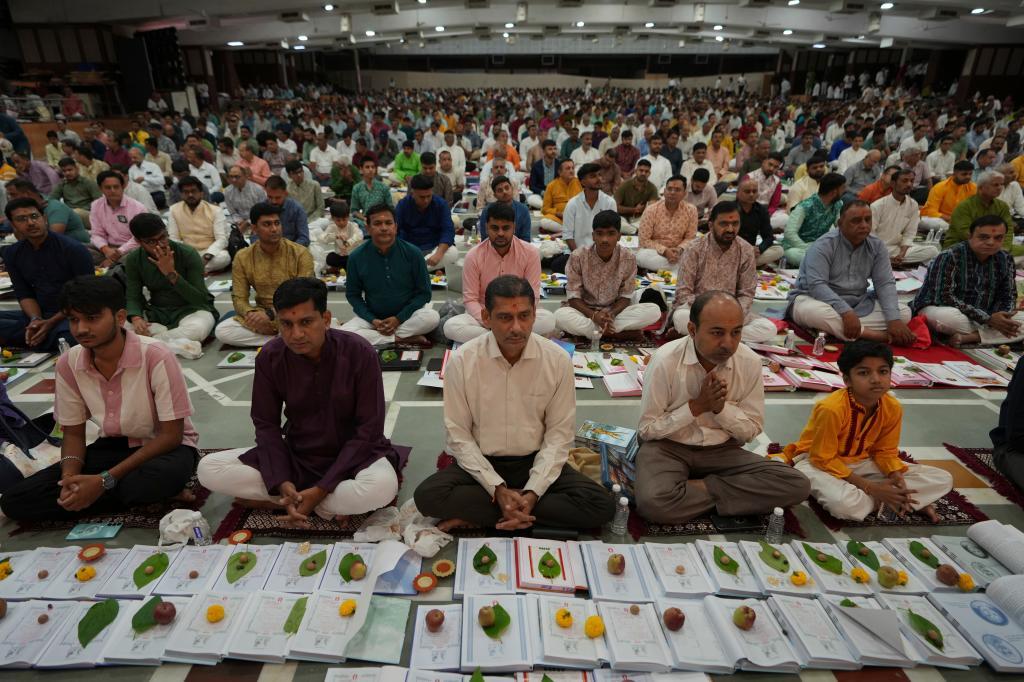
The business has also infiltrated state-funded weddings. Subsidized collective ceremonies have spread to alleviate one of the greatest economic burdens on poor families. A wedding can consume years of savings, lead to loans, and leave debts for a long time, compounded by the persistence of dowries despite being legally prohibited. Regions like Uttar Pradesh organize large ceremonies where hundreds or even thousands of couples marry simultaneously and receive public assistance.
During the 2025-2026 fiscal year, the authorities of Uttar Pradesh facilitated the marriage of 76,522 couples. The aid has risen to around 100,000 rupees per marriage, distributed between direct transfers and ceremony expenses. But where public money appeared, a small industry emerged to capture it: fake documents, fictitious couples, and simulated marriages. Even marriages that were already legally established have been detected, going through the altar again solely to collect the subsidy.