Sari Multala (Helsinki, 1978) is the Minister of Climate and Environment of Finland. She was appointed in January 2025 after leading the Ministry of Science and Culture for a year and a half. In her life before politics, she was a prominent Finnish athlete who competed in sailing, becoming a two-time world champion in the Laser class and participating in three Olympic Games.
She grants this interview to EL MUNDO, along with other European media, dedicating much of it to outlining the benefits and advantages of nuclear energy; explaining how Finland leads globally in managing waste from this sector; and highlighting the broad acceptance of this energy source in Finnish society.
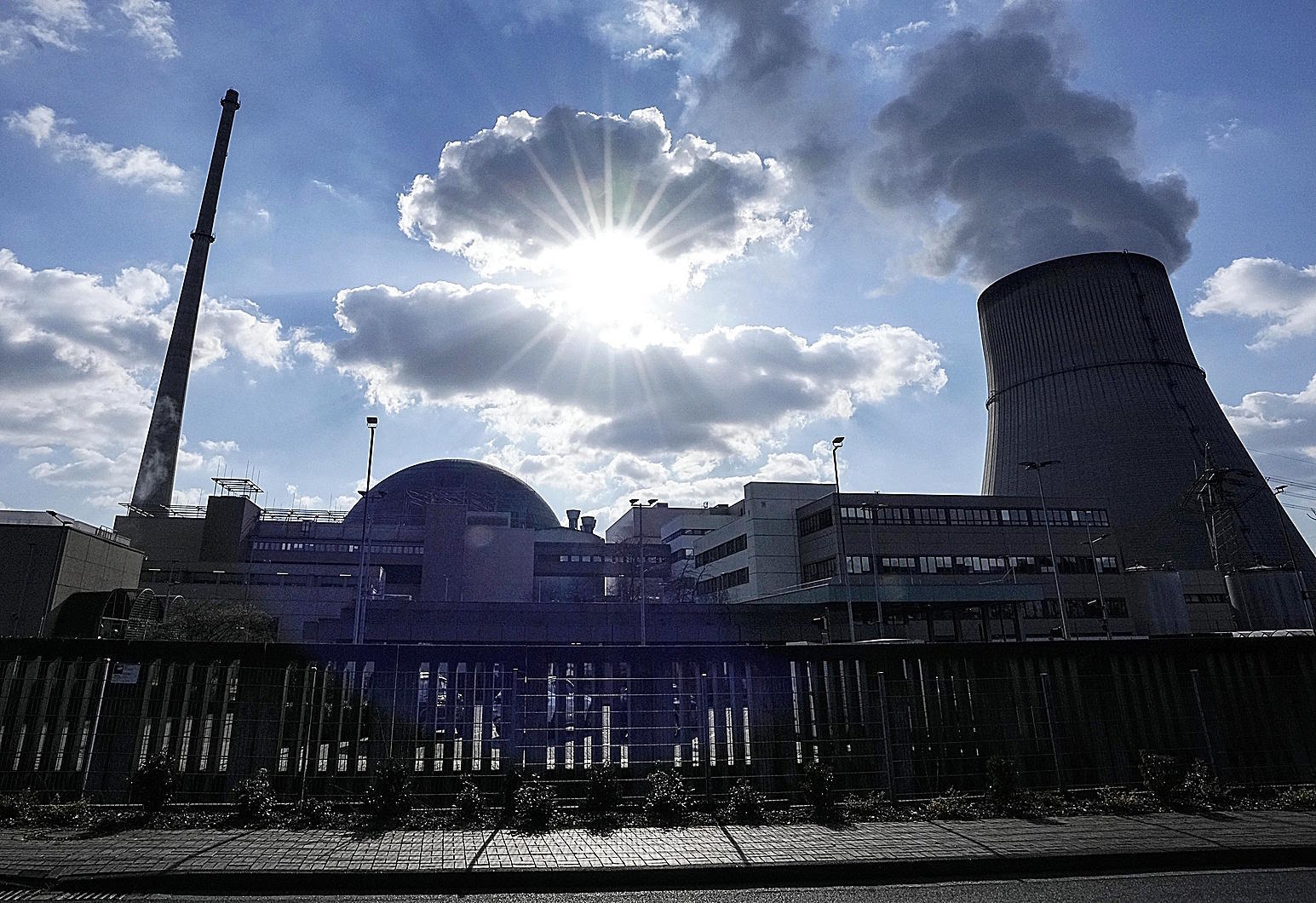
"Finland will be the first country in the world to operate a permanent repository for used nuclear waste in Olkiluoto. The government just approved, two weeks ago, the authorization for its operation. And that is one of the reasons why Finns support nuclear energy so much. I believe it is safe because we have demonstrated, and will demonstrate to the whole world, that it is possible to find a safe solution for nuclear waste as well. That is one of the main arguments explaining the public's support," she states when asked about the advanced project to install small modular reactors near Helsinki.
"We take energy security very seriously, especially nuclear safety," Multala continues. "I have also visited, for example, Chernobyl, and I could clearly see that there are differences in the seriousness with which safety is approached. That is why Finns trust our system. They also trust our authorities, which are highly regarded internationally and play a fundamental role. That is why I believe that most citizens, not all, but most, consider that a nuclear facility is not dangerous, even if it is close to their homes," she emphasizes.
She offers a third argument in her strong defense of nuclear energy and its facilities: "We already have, for example, the Loviisa plant, which can be seen from the city center. It is not a kilometer away, but it is not very far either. And these are much larger facilities than the reactors currently being planned. Furthermore, in the case of the small modular reactors being studied to produce heat, the proposed solution is to install them underground. Therefore, they would not be visible on the surface. If you know even a little about how nuclear plants operate, you will know that they are built with numerous protection systems."
Multala also explains that 40% of the electricity produced in the country comes from nuclear energy. "The last major nuclear facility that has come online in Europe is in Finland: Olkiluoto 3, which began operating in 2023. This has allowed us to virtually eliminate fossil fuels from our electricity production. Currently, 95% of our electricity is produced without fossil fuels. If we look at the last few years, before Russia attacked Ukraine in 2022, we were still importing a third of all the energy we consumed from Russia. Now we no longer import anything from Russia," the minister continues.
Wind energy, both offshore and onshore, is also very important in Finland, as it accounts for nearly 30% of the electricity the country needs. But at this point, a very relevant issue arises for the eastern part of the country. For the area that shares a 1,300-kilometer border with Russia. The facilities needed to generate this type of energy can pose a problem in terms of defense and drone detection.
"It is an issue we are constantly trying to resolve because we also need energy production in the east, especially in the southeast of the country. But there are still obstacles we must overcome. Technical solutions exist. The problem is that they cost money, and the state does not have those resources. At the same time, for wind companies, it is still not economically viable to bear those costs. We need to find solutions," she explains. She adds: "It is not a problem for offshore wind energy because it is developed on the western coast, between Finland and Sweden. The problem mainly affects onshore wind energy near the eastern border."
And in the meeting, the minister does not forget to demand that there be no further delays in the implementation of the ETS2 emissions trading system, something that countries like Italy and Poland are requesting. "That request has been on the table for a long time, and we have already delayed it once, for a year. We must not do it again," she states.
"If we weaken the ETS, we will reduce our own competitiveness in Finland. We have already made that transition. And it would also affect our energy security. I believe all European countries need to be able to produce more energy within Europe. It is something we have achieved while also distancing ourselves from Russian fossil fuels. We have become more energy self-sufficient. Therefore, I believe we can achieve several objectives simultaneously: reduce emissions, improve our competitiveness, increase our self-sufficiency, and strengthen our energy security," she concludes.