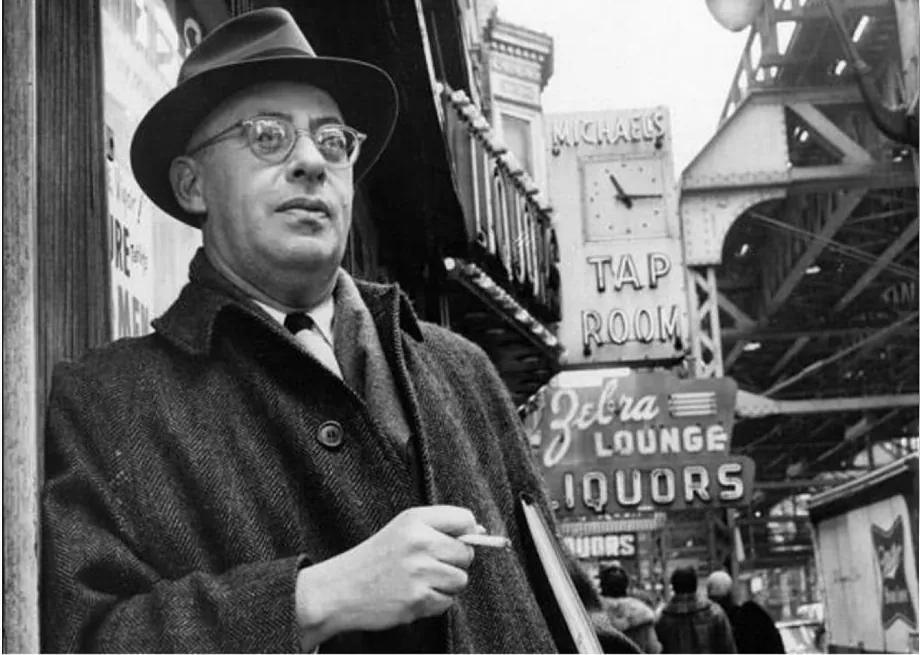
"Do what you can with what you have." Saul Alinsky (1909-1972), a sociologist from Chicago, dedicated this phrase to activists of the social movements in the U.S. during the 60s and 70s.
A similar idea guided conservative activism from José María Aznar in November 2023, at a public event supporting Alberto Núñez Feijóo: "Those who can do, do; those who can contribute, contribute; those who can move, move," demonstrating that political action wields the same tools, wherever it is, regardless of ideology. The difference lies in the money that backs it and the position from which it is practiced.
Some Americans thank Saul Alinsky for his main work, Rules for Radicals, published in 1971 with the subtitle "A Pragmatic Guide for Realistic Radicals."
Alinsky wrote it based on decades of experience in disadvantaged communities in the United States, under the premise that power is not achieved solely by being right but by organizing people, resources, and pressure capacity.
As a manual, it concentrates its potential in 13 basic rules. The first seems taken from poker: "Power is not just what you have, but what the adversary thinks you have."
The work did not become a secret manual for revolutionary activists but a reference work for community organization and political mobilization in the U.S., followed by both progressive movements and conservative organizations, as it detached collectives from their leaders.
One of its premises, "The first task of the organizer is to create the problems or issues," aligns perfectly with the idea developed in the headline of the printed edition of EL MUNDO on November 11: "Sánchez stirs political strike and squeezes electoral decrees," in light of the general strike taking place today in Spain, the first called in Spain in the last 14 years.