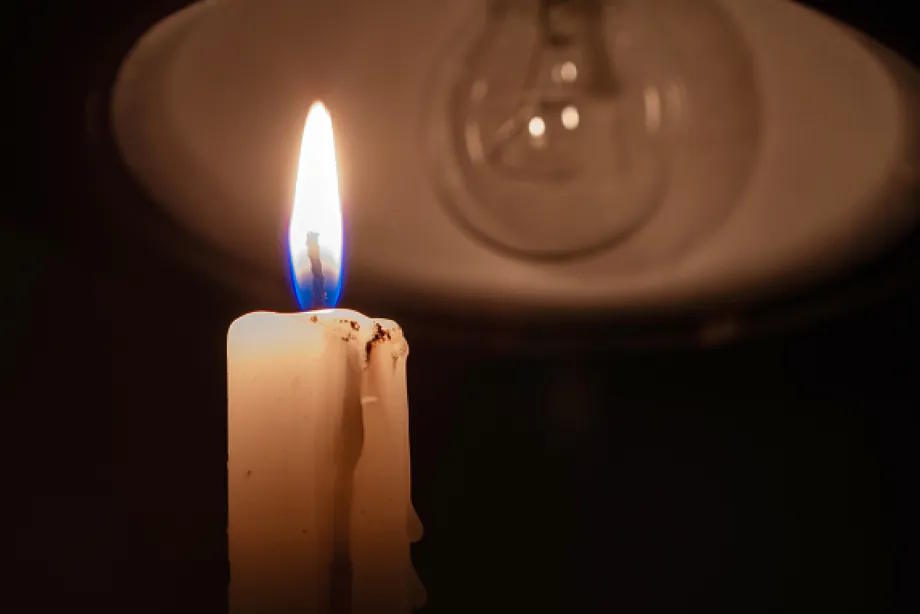
Will there be a global blackout for 72 hours on November 17? This rumor, which is starting to go viral on social media, combined with the blackout in the Canary Islands, ongoing cyberattacks, bomb threats on airplanes, and schools in Italy, along with the fact that governments in various countries are disseminating manuals for the population to be prepared with what they need to face the initial hours of a disaster, seems to have triggered alarms. To top it off, an episode of The Simpsons (everything is in The Simpsons) had already predicted a major blackout on that date.
What is true? Nothing. This rumor originates from the fact that on November 17, there will be a national test of the Emergency Alert System (EAS) in the United States. The prior notice already warns about its scope: "This is only a test. No action is required by the public" (This is only a test. No action is required by the citizen).
This drill will be a simulation to verify that emergency messages are disseminated correctly through media in the United States. Does this mean there will be a 'controlled' blackout in the United States? Not at all: messages in English and Spanish will only be transmitted through radio and television stations to inform that it is a national test, aimed at reviewing the system's functionality.
The agency has set December 3 as an alternative date in case the November drill does not take place, so it is possible that this new date will also go viral.
This paranoia is compounded by an episode of The Simpsons in which, according to many internet users, the catastrophe was already predicted. Specifically, it is the Thanksgiving special episode from season 35 of the series titled It's a Blunderful Life.
During the episode, with the whole family gathered at the table, Lisa recounts how on November 17, a blackout occurred that nearly destroyed the city. The Matt Groening series does not specify the year it happened, but that has not stopped the clip from going viral.
However, in this context of cyberattacks and following the practical guides disseminated by some states to face the first 72 hours of an emergency, it is wise to be prepared and know what is necessary to best handle a potential power outage.
From cash to medications, it is recommended to have everything necessary to "face" the first 72 hours of a possible emergency while waiting for rescue services to intervene.
The "72-hour kit" has quickly become one of the most searched topics on Google in recent days: water, energy bars, and cash. These are non-mandatory recommendations from the European Union, urging member countries to have essential goods and equipment to face possible emergencies.
The goal is not to generate alarm but to provide information to prepare the population for various types of risks.
What the "72-hour kit" includes
The kit recommended by the European Union for facing the first 72 hours of an emergency includes: drinking water, medications, non-perishable food, flashlights, external batteries, small denomination bills and coins (in case electronic payments are not possible), essential items for babies, vulnerable individuals, and pets.
Essentials for facing a power outage
In the event of a blackout, the essential items for safely handling the situation are undoubtedly related to lighting, communications, backup power sources, and essential products.
From LED lamps to flashlights, including external batteries to charge various devices (preferably with integrated solar panels), a supply of batteries (both AA and AAA), portable power stations, and candles.
Also a FM/AM radio, a device that allows access to essential information even when there is no internet connection or power supply.
In the UK, following government alerts recommending stocking up on reserves and basic equipment to face possible emergencies, an Italian-made emergency radio has quickly sold out, specifically produced in Reggio Emilia. It is a hand-crank radio that also includes a flashlight and is currently listed as "out of stock" even in Italy.