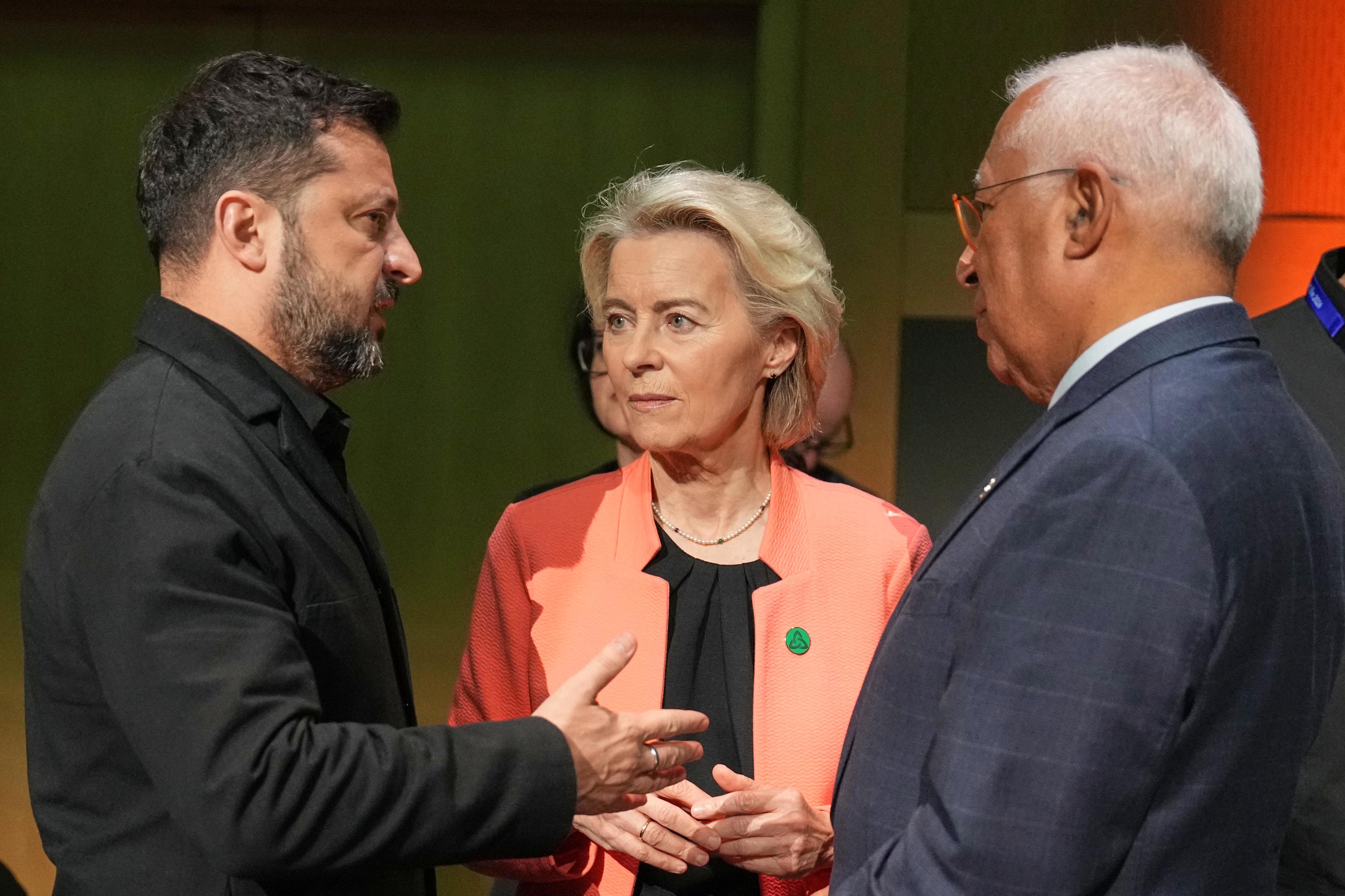
The options are numerous, and it is not even clear if anyone should do it or not. This Friday, at the informal summit in Dublin, it should be decided who and how represents Europe at the peace talks on Ukraine. However, the interventions of various leaders the day before highlighted, once again, the distance between different countries and institutions. Additionally, although Vladimir Putin seems to have backed down due to pressure from the United States, Russia has always rejected European presence and has completely undervalued the Union.
On one hand, there is the position of Germany and France, which do not consider it essential to appoint a negotiator. Both countries, along with Great Britain, form the group known as E3, and Chancellor Friedrich Merz stated yesterday during the European Political Community summit that he sees "no problem with this remaining the case." "What matters is that Russia sits at the table and is willing to engage in talks. Everything else will fall into place," he emphasized.
Italy, on the other hand, did advocate for appointing a voice to lead Europe, something shared in several capitals, and did not rule out that this person could be the President of the European Council, António Costa, who was one of the names mentioned yesterday.
"Without a doubt, President Costa has this within his competencies, and his role in this matter has been discussed in the past; for my part, there would be no objection," pointed out Italian Prime Minister Giorgia Meloni. However, she also emphasized that "the issue is not just about presence or variety of formats, variety of interlocutors, but also about what is discussed at those tables." She added that it is also necessary to find a way to articulate the representation of European countries that are not part of the EU but have an important role, such as Norway or the United Kingdom.
Meloni has been very critical of Europe's lack of coordination on this issue, and last week she sent a letter to Costa himself demanding an end to the different negotiation formats that have been created. In some circles in Brussels, it has been suggested that this complaint is actually due to Italy being left out of some of these conversations in which it was initially involved.
Costa himself, meanwhile, did not want to discuss the possibility of being the voice that Europe needs, and limited himself to stating that a "joint effort" among European countries is necessary. "You cannot debate Europe's security without a European voice at the negotiating table," he demanded.
And the EU's High Representative for Foreign Affairs, Kaja Kallas, also presented her candidacy to lead the talks: herself. "Regarding European security, the treaties are very specific: it is António Costa and the High Representative and Vice President who represent Europe on security matters. So, of course, leaders can choose differently and reopen this debate, which is always difficult, or we should simply adhere to the agreements we reached in 2024," she stated from Dublin.
Her position was supported by Kristen Michal, Prime Minister of Estonia, which is Kallas's home country and from which she actually succeeded her in the position. The problem is that Russia does not exactly hold the High Representative in high regard, and many in the EU believe that reaching an agreement with Russia is paramount.
Ireland, which holds the rotating presidency of the EU and is hosting the summit, limited itself to expressing "optimism" about the future of the negotiations. "I believe there has been a change in recent weeks," said Irish Defense Minister Helen McEntee. And Spain? Nothing. The Prime Minister, Pedro Sánchez, did not attend the meeting as the electoral campaign began early this morning, and therefore no Spanish representative has shown their position so far in Dublin.