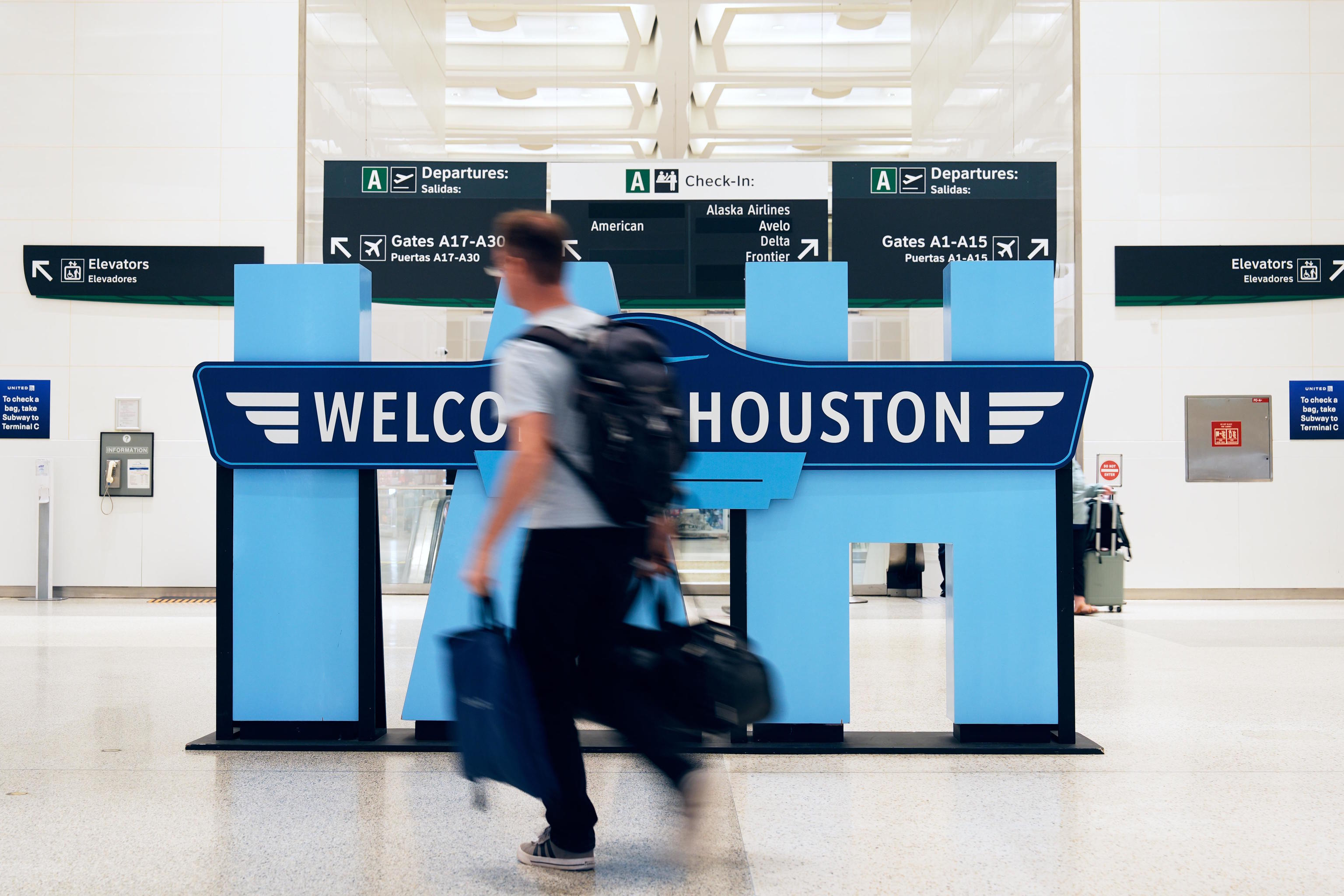
US airports have begun to gradually return to normal this Saturday after the historic airspace shutdown ordered on Friday by the Federal Aviation Administration (FAA), the most serious incident since the September 11, 2001 attacks. The reopening occurred around 8:15 PM last night, after nearly five hours of total flight departures paralysis across the country, caused by a failure in communications at air traffic control centers.
The interruption triggered a real chaos in transportation, with more than 8,000 flights canceled and many more delayed, affecting nearly two million passengers. Although authorities authorized the resumption of operations, they warned that recovery would be very slow, as airlines need to reposition planes and crews and reorganize their schedules. Airports like Ronald Reagan in Washington, for example, literally ran out of space to park more aircraft. According to data from Cirium, a specialized company in the sector, more than 3,200 flights, 14% of those scheduled for today, have been canceled, but of the 2,000 flights that were supposed to depart for international destinations, less than 10% have been canceled so far.
"Operations are gradually returning to normal this morning. Planes are leaving the gates, taxiing, and taking off, and it is safe to fly. We are in close coordination with airlines to support the ongoing recovery. There will continue to be some delays and cancellations as airlines reschedule flights and reposition planes and crews where they are most needed. Our top priority right now is to ensure that travelers return home safely and soundly to their families as soon as possible. To our air traffic controllers, pilots, and flight crews who are working tirelessly: the nation thanks you for your professionalism and dedication to serving passengers," said Sean Duffy, the Secretary of Transportation, early this morning.
In a statement hours later, the government blamed the company responsible for maintenance for the disaster. Duffy explained at a press conference that it all started when employees of the firm, L3 Harris, were working on a remote installation to replace old copper wiring with fiber optics. "We are investigating whether it was a matter of incompetence or if they installed a defective router. We have not yet determined what the problem was," said the federal transportation official. Technicians rule out that it was a cyberattack or that AI had anything to do with it.
Beyond the immediate consequences for travelers, and the cold sweat thinking about what would have happened if the incident had occurred in two weeks, during Thanksgiving, the busiest travel time of the year, the incident has reopened the debate about the state of US aviation infrastructure and the reliance on aging technological systems. The situation is dramatic and anything but surprising. Congress allocated more than $12 billion last year for the upgrade of this specific sector, but experts say it is not enough. And above all, that there is no way to do it without causing new disruptions after decades without investment, reforms, or improvements.
On Friday, Secretary Duffy attributed the failure to an overload of the communications equipment and routers of the old network. Duffy, who before entering politics was known for participating in reality TV shows on networks like MTV, has been talking about the issue for two years. And just last week, he specifically addressed the situation of air traffic control. A statement from his department on November 5 announced with fanfare the "historic modernization of the US air traffic control system through the replacement of obsolete floppy disks that contain vital weather information and other critical data with a 21st-century optimized system". Yes, floppy disks.
The Enterprise Information Display System (E-IDS) that will now be used replaces four systems dating back to the 1980s and found in more than 400 FAA facilities. "The E-IDS provides a unique and secure system that allows air traffic controllers faster access to the information they need. Additionally, it will reduce costly repairs and workarounds while improving the safety of US air travelers," said Duffy's team.
According to data from the FAA itself, between 2024 and 2025 there was a 338% increase in flight delays related to equipment problems. In many cases, since there are no longer spare parts for obsolete technology, technicians have to improvise, patch, or resort to 3D printing parts to keep systems running. In the spring, the airspace over the New York area had to be closed for a few hours because someone accidentally cut a cable. And in Washington, the previous year, the control tower was briefly closed after a short circuit that polluted the air and made controllers vomit. Unions have been sharing wild stories since yesterday, such as how there are broken elevators in states or cities that exceed 40 degrees in summer, which has led to the temporary closure of an airport or airspace because controllers could not reach their posts or were concerned for their health if they tried to walk.
The problem is how to make the transition. Nick Daniels, president of the National Air Traffic Controllers Association, told the Financial Times last week that transitioning to new systems "when facilities, already short-staffed, are under enormous pressure, is like 'changing a tire while going 70 miles per hour'." A very visual image. In places like Kansas City, the air traffic control tower still uses systems that run on floppy disks and manually record weather updates every hour, protocols that the rest of the planet updated decades ago.
Secretary Duffy's team claims that in recent years 68% of the old copper wiring has been replaced and 49% of voice switching systems have been modernized. However, the Government Accountability Office (GAO), a congressional oversight agency, warned in September that "a poorly planned upgrade" could force controllers to continue using old systems for longer, leading to "more system disruptions, ground stops, flight delays, or worse, safety incidents." Exactly what happened, with unions questioning how it was possible to carry out upgrade operations in the middle of a workday, and not overnight when there is little traffic, as is usually the case.
"I think many times those who just write reports are not working directly on the ground. "If we did things the way the GAO wants us to do... we would still be conducting studies in 2035 while copper lines continue to deteriorate underground. That is not prudence, it is paralysis," Duffy told the FT on the 5th. Prophetic.
The FAA believes the problem was limited to a specific type of router that has been in use for more than two decades. It suffered an overload, but the reasons are unclear. According to what CBS had previously reported, "when the routers were overwhelmed, they began transmitting desynchronized data. For controllers, this caused static in their voice communication lines and made their screens flicker or go black."
Duffy confirmed in his statement that when officials realized the system was overloaded, they decided to suspend operations. "Once the problem was identified at the remote location, all our systems were back up and running," he added.