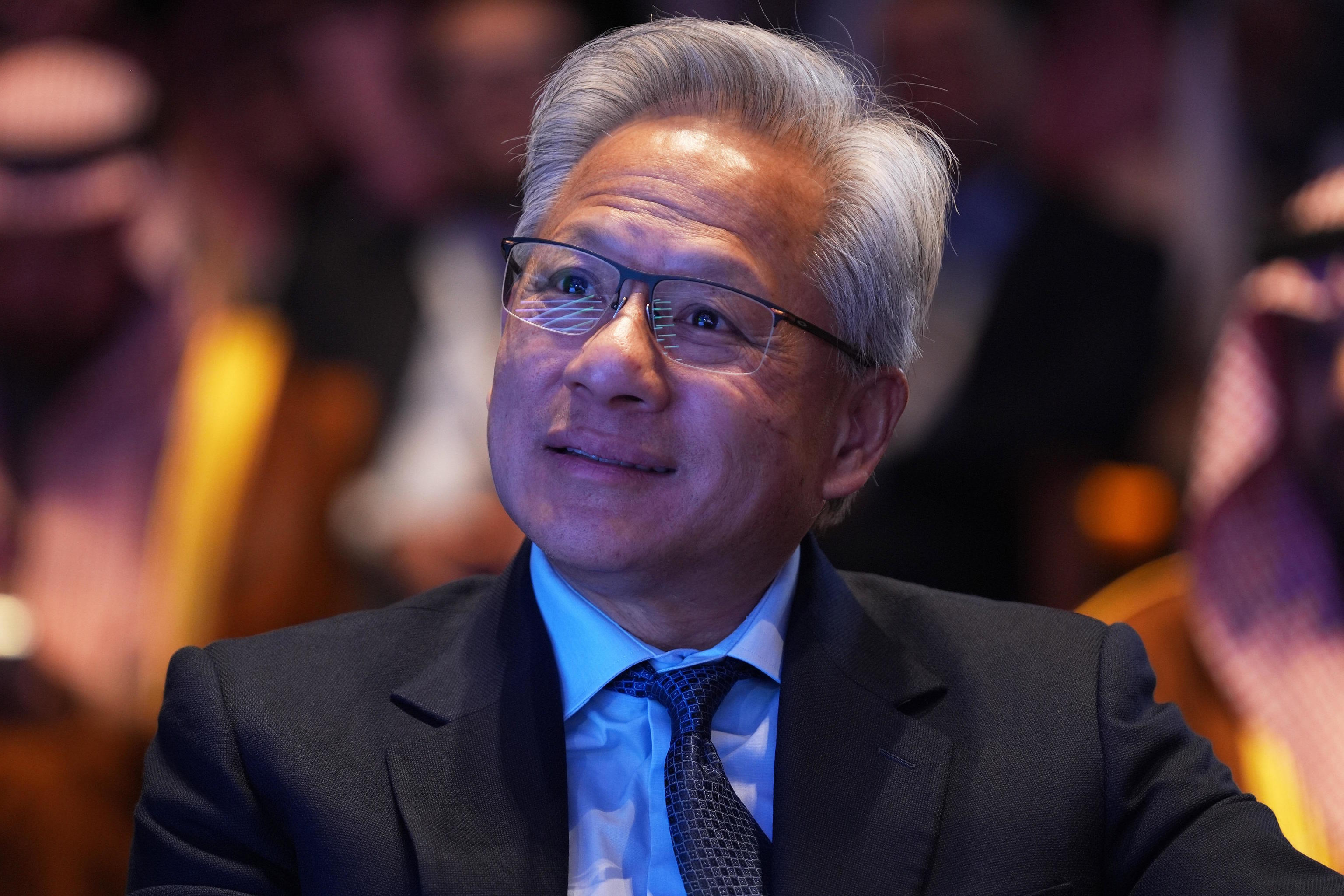
The technological standoff between the United States and China has moved from factories to the private life of the man who turned Nvidia into the leading supplier of artificial intelligence. Now, Jensen Huang's resignation threatens to close one of the last doors Beijing was trying to keep open to access the most advanced U.S. processors.
Huang advocated selling to China to avoid pushing it to manufacture its own alternatives. His closeness to President Donald Trump allowed for some flexibility. However, his relationship with Alice Huang, a Chinese businesswoman suspected by U.S. intelligence of working for Chinese spies, has provided arguments for those demanding a tougher stance.
Although the Asian giant warns that it has a powerful tool to respond to a new tightening of U.S. restrictions: the dominance of rare earths.
If Washington uses the Nvidia scandal to further limit the sale of AI chips, Chinese authorities could respond by restricting their rare earth exports. Many Chinese economic analysts remind us these days that this dispute reflects the technological dependence between the two superpowers: the U.S. controls a significant portion of the most advanced processors that China needs, while Beijing controls the supply of essential materials for numerous U.S. industries.
Politically, Chinese government spokespeople demand that Washington stop "fabricating stories about Chinese spies" to justify its "technological blockade," referring to the scandal surrounding the Nvidia founder's mistress. This has erupted just before a meeting between Presidents Donald Trump and Xi Jinping in Shenzhen. The choice of venue is particularly symbolic: a summit held in China's tech capital, one of the main engines of Beijing's offensive to break its dependence on U.S. technology.
The chip war between the two largest economies in the world began during Trump's first term. In 2019, Washington placed the Chinese giant Huawei on its trade blacklist, and in 2020, it expanded restrictions on foreign manufacturers using U.S. technology to produce chips intended for the Chinese giant.
The Biden Administration expanded that initial offensive, banning the export of high-power processors and advanced machinery for semiconductor manufacturing. In this context, Nvidia tried to adapt by designing less powerful versions of its chips, such as the A800 and H800, specifically for the Chinese market. However, in 2023, Washington tightened controls again to also prevent the sale of those models.
Trump's return to the White House began with a new wave of restrictions that did not last long: in December 2025, Washington opened the door to the export of Nvidia's much more advanced H200 chips, under a 25% announced tax. That decision was a victory for Jensen Huang, who had been pressuring for the Chinese market for months.
Meanwhile, China was shifting to another strategy: restricting certain purchases of foreign chips to favor its own manufacturers and reduce its technological dependence on the U.S. Xi Jinping's government has been interpreting that external dependence as a strategic threat for years. Self-sufficiency is its priority.
Huawei is developing its own AI chips, with which it aims to compete with Nvidia's. This year, the Chinese manufacturer Hua Hong is also advancing in the development of seven-nanometer chips, a technology that allows for the concentration of millions of tiny electronic components in a very small space and the manufacture of more powerful and efficient processors.
In Washington, the scandal surrounding Jensen Huang has become parliamentary ammunition. According to U.S. media reports, both Republicans and Democrats are seeking to include three measures in the annual Defense bill. The first would expand Congress's control over licenses to sell advanced chips; the second would require mechanisms to track them and combat smuggling; and the last would pressure allies to restrict semiconductor manufacturing machinery.
In the crosshairs is one of the main avenues that Chinese companies have used to circumvent U.S. restrictions: renting computing power in centers located in Southeast Asia. This mechanism allows access to Nvidia's most advanced processors without physically introducing them into China.
It is precisely the business model that is under suspicion in the Nvidia case. According to U.S. investigations, Alice Huang and her husband, through a complex network of companies, allegedly facilitated access to Nvidia's processing capacity from facilities in countries like Malaysia and Singapore.
According to Reuters, some Chinese companies are rushing these days to rent computing capacity in foreign data centers to continue using Nvidia's most advanced chips without needing to import them. They fear that Washington will soon close this access route, which allows them to leverage U.S. technology remotely despite trade restrictions.