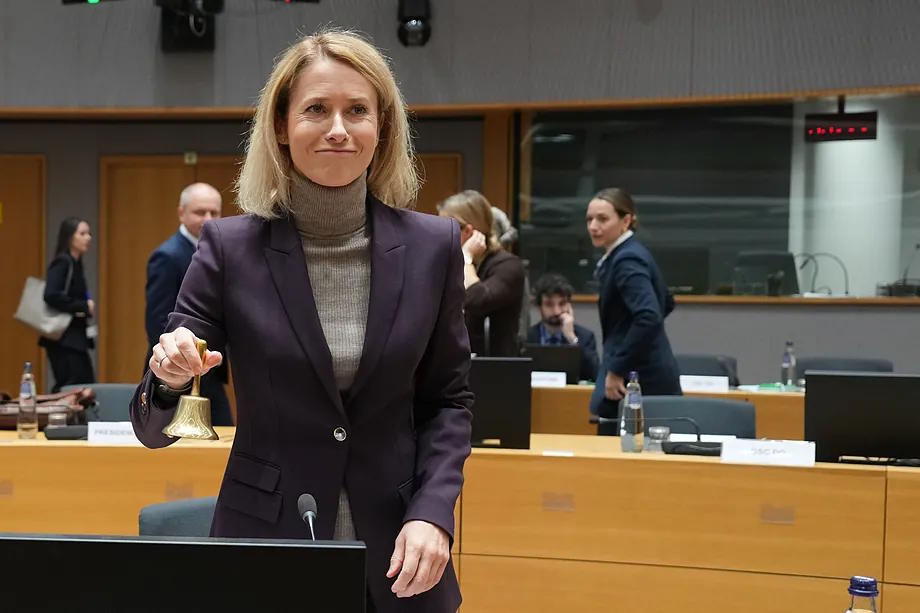
At the same moment the decision was announced, Friday afternoon in Dublin, the analysis was almost unanimous. Kaja Kallas would not only not be the voice of the EU in any potential negotiations with Russia, but the head of diplomacy was practically sidelined from any peace talks for Ukraine. Consequently, the figure of the High Representative of the Union for Foreign Affairs has become very weakened.
As the hours passed, explanations were heard and events settled, the assertion in diplomatic circles went even further: "The leaders, the countries, have politically killed Kallas". So much so that some voices even suggested that the head of European diplomacy should resign. She should not tolerate the disdain from the countries that precisely chose her for that position, and now do not want her because they consider her too anti-Russian. Too tough to talk to Vladimir Putin, if that ever happens.
"There is still much work ahead and, of course, you will see me a lot in the coming days," Kallas responded to those voices and rumors yesterday in her remarks to the media prior to the meeting of foreign ministers that took place in Brussels. And in the subsequent press conference, she insisted that she is "willing" to continue fulfilling her role as High Representative, and that it is "a relief" that there is no longer talk of who should lead the conversations on behalf of Europe since it will now be easier to focus "on the content".
But the situation she faces is far from simple. Her relationship with the President of the Commission, Ursula von der Leyen, has never been the best, and on Friday she also found that the main countries of the European Union do not support her. Perhaps Spain, but in this matter, the Spanish voice is not very significant and the Prime Minister, Pedro Sánchez, did not even travel to Ireland to attend the informal summit of presidents.
The Chancellor of Germany, Friedrich Merz, and the President of France, Emmanuel Macron, were present, of course. Both pointed out as early as Thursday that they saw no need to appoint someone to lead the talks and that they wanted to be present at the table. The Italian Prime Minister, Giorgia Meloni, at one point did show openness to that possibility, but pointing to the President of the Council, António Costa. And by Friday, within the room accessible only to heads of government, it became very clear that the main leaders do not support Kallas at all.
Because, as has been said, they believe she would make any conversation with Moscow very difficult, but also because she harshly criticized the attitude of the United States when she made the case for herself as the necessary voice of Europe. And that particularly displeased Meloni, as reported by the Italian agency Ansa, always well-informed about the Prime Minister.
The final result is that the leaders opted for an E5 model (Germany, France, Italy, Poland, and the United Kingdom plus representatives of the institutions). A very harsh setback for Kallas, who surely did not have an easy night on Friday. However, on Saturday, she did not want to miss visiting Trinity College, and by Sunday, back in Brussels and after a few hours to digest the blow, she put on her large Bose headphones again and turned to reading Mao: The Unknown Story.