The explosions echoed one after another. The next assault was more limited. Only two huge blasts were heard around 4:45 AM.
"The air defense is functioning in the capital. Kiev is being attacked with ballistic missiles. Please stay in shelters!" warned the mayor of Ukraine's main city, Vitali Klitschko, via social media after the first incident.
Shortly after, he identified the targets of the bombings.
"Preliminary reports indicate that impacts have occurred on the North and South bridges of the capital. As a result of the enemy attack, damage has occurred to critical infrastructure systems. Some areas are experiencing interruptions in water and heating supply," he added in his messages.
By 10:45 PM on Monday, the streets of Kiev were almost empty. The few vehicles circulating near the Dnipro River encountered police cars blocking the roadway, cutting access to both crossings.
On Tuesday morning, Kiev—a city of nearly 3 million inhabitants and the size of Berlin—woke up to massive traffic jams due to the disruption of traffic on both routes, crucial for allowing vehicle movement between the two sectors of the city separated by the Dnipro River. Several metro lines and local trams were also blocked.
The events in the capital were not the only ones the country suffered. Russian ballistic missiles hit the regions of Zaporiyia, Dnipro, Kharkiv, and Cherkasy.
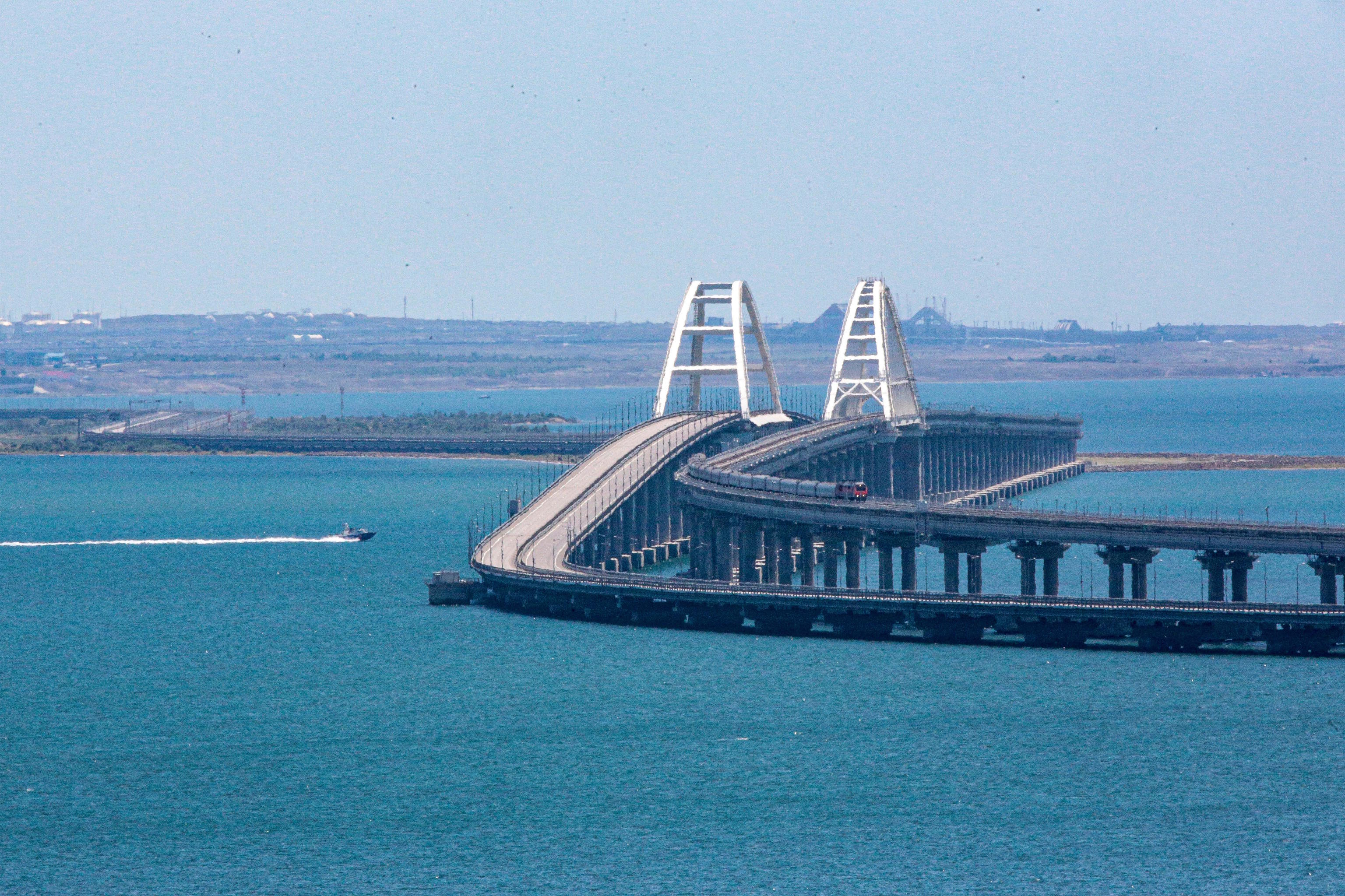
It is unclear whether the Russian assault is linked to the symbolic incident that occurred hours earlier when a Ukrainian missile significantly damaged the Kerch Bridge, which connects Moscow's territory with the Ukrainian peninsula of Crimea, occupied since 2014.
The 19-kilometer platform, which cost over 3 billion euros and was inaugurated by Russian President Vladimir Putin in a pompous ceremony on May 15, 2018, has become a reference point for Moscow's presence in the territories it occupies in Ukraine.
A Kremlin spokesperson, Dmytro Peskov, acknowledged the incident but stated that the damage was "insignificant." "The connection (between Russia and Crimea) continues," he added.
This statement contrasts with that of the top Russian official in the Peninsula, Sergei Aksyonov, who said on Telegram, "The enemy has attacked the Crimea bridge again. Currently, traffic is suspended. We ask residents and visitors of Crimea to refrain from traveling to the bridge," he commented in a message released shortly before midnight on Monday.
The Crimea bridge had already been hit three times previously. This time, images show damage caused to a section of the asphalt and how debris appears to have also blocked the maritime passage that runs beneath the structure.
The Russian Ministry of Defense reported that its defenses had shot down 1,441 enemy drones in about twenty regions of the European part of the country and the Black and Azov seas.
Russian attacks on the bridges in Kiev began in early October with drone strikes, which later escalated to missiles. The most severe incident occurred on the 27th of that month when several missiles exploded on the same South Bridge that was damaged in recent hours. On November 7, another four projectiles hit the North Bridge.
According to President Volodymyr Zelensky's warning, Moscow has ordered the destruction of all similar infrastructures along the Dnipro, not only in Kiev but in cities like Dnipro and Zaporiyia, to "divide Ukraine and make life as difficult as possible for the population."
Local authorities have begun to design a plan B in light of the highly probable hypothesis that Russia will maintain its offensive against the 8 bridges that connect both banks of the Dnipro in Kiev.
According to Infrastructure Minister Mykola Kalashnyk, two provisional pontoons have already begun construction to ease vehicle movement on the crossings that remain intact. The official plan is for them to be operational by February 2027.
"We plan to create a total of 21 crossings over the river," Kalashnyk added on October 30. Vitali Klitschko specified that 22 million euros will be allocated for this purpose.
Last Monday, during a meeting with a delegation of visitors from the U.S., Vitali Klitschko explained the enormous challenges the metropolis faces amid the constant barrage of Russian rockets and drones.
"We continue to be subjected to massive attacks. They are trying to destroy the water, heating, and energy supply systems," he stated.
But at the same time, the mayor maintained the defiant tone that Ukrainians uphold. "I want to emphasize that Kiev is still alive and functioning, overcoming the terrible challenges of war," he insisted.