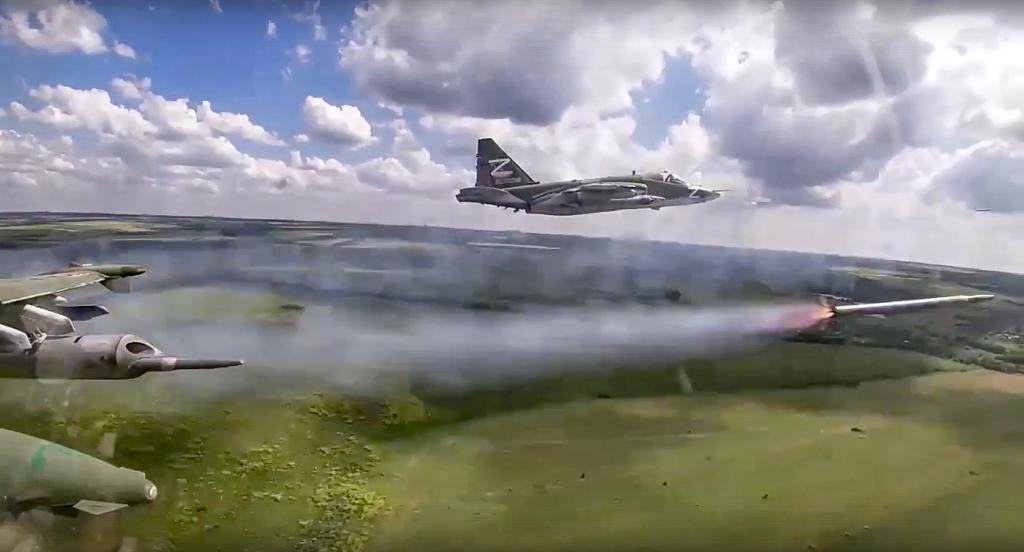
At 4:00 AM on Tuesday, two Russian aircraft crossed Japan's airspace. The first lingered for about three minutes over the territorial waters near Okinoshima, a small uninhabited Japanese island. The second did the same just two minutes later. Japanese fighter jets were scrambled and issued warnings. Moscow was once again opening a front of tension in Asia just as Vladimir Putin was preparing to travel to China for the most important economic forum in the Asia-Pacific region.
The incident did not end there. According to Japan's Ministry of Defense, the aircraft continued south and passed between Yonaguni, the Japanese island located about a hundred kilometers from Taiwan, and the Taiwanese coast, before heading into the Pacific. From Taipei came another alert: they had also detected two Russian military planes off the eastern coast.
Taiwanese authorities reported that the planes entered from the northeast into their air defense identification zone and that their military monitored the entire maneuver using their surveillance systems. There is a notable difference in this case compared to Japan's: an air identification zone does not equate to sovereign airspace. Tokyo reported a violation of its territory, while Taipei alerted to Russian military activity in an area designated for identifying approaching aircraft.
"It is a serious violation of our sovereignty and a threat to our security, completely unacceptable," denounced Minoru Kihara, Chief Cabinet Secretary. Tokyo lodged a formal complaint with Moscow. Japanese media remind that Russia regularly sends military aircraft into the international airspace surrounding Japan, and that Tuesday's incursion may have aimed to test the Japanese military's response time.
The alarm even reached neighboring South Korea, which mobilized fighter jets after detecting several Russian planes in its air identification zone. Seoul clarified that there had been no violation of its airspace.
This is not the first time Japan's Self-Defense Forces have encountered Moscow's aircraft. In September 2024, a Russian plane entered Japanese airspace three times north of Hokkaido. Tokyo responded by deploying F-15 and F-35 fighters, which even launched warning flares.
Behind the aerial frictions lies a dispute that has persisted since World War II. Japan claims four islands at the southern end of the Kuril Islands, referred to as the Northern Territories in Tokyo. The Soviet Union occupied them in 1945, and Russia maintains control. This dispute has prevented both countries from signing a definitive peace treaty, despite restoring diplomatic relations in 1956.
Tensions have surged again this year. Last August, Putin visited one of the disputed islands, provoking an angry protest from Japan. In October, Russia detained a Japanese journalist accused of espionage.
The latest incident occurred just as Putin was about to land in Shenzhen, the Chinese tech metropolis hosting the APEC summit. On Thursday, the Russian president will sit down with Donald Trump and Xi Jinping in an unprecedented trilateral meeting among the three leaders. Washington wants to address nuclear arsenal control and strategic stability, while the war in Ukraine casts a shadow over discussions with Moscow.
Also in Shenzhen will be Sanae Takaichi, the Japanese Prime Minister. Her presence places the Russian leader and the head of a country that has just accused his planes of violating national sovereignty in the same city. No bilateral meeting between the two has been announced.