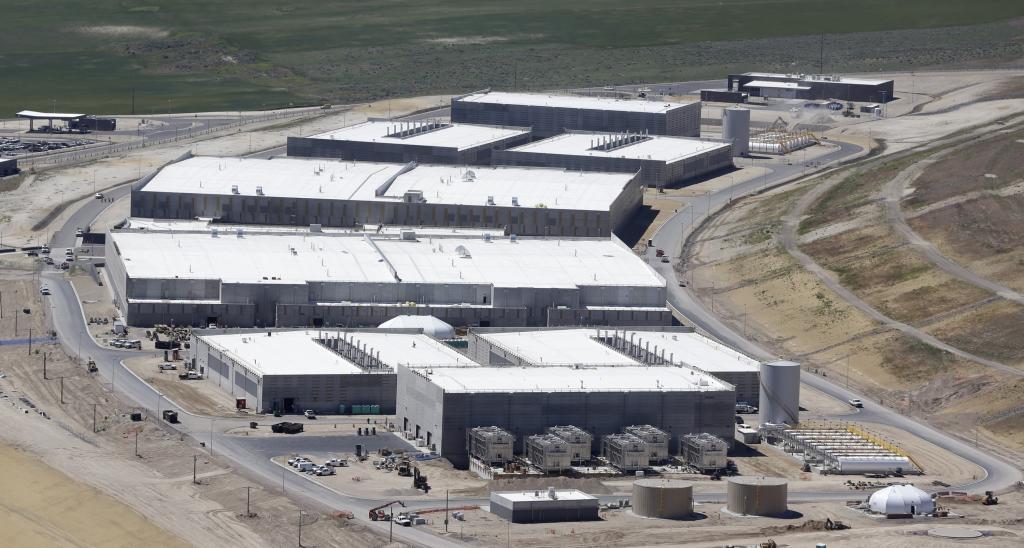
The rumor that points to data processing centers (DPC or data centers) as the herald of all that can go wrong for humanity is spreading worldwide: "Can data centers be well designed?" "A study maps the heat islands created by data centers around the globe." "The demand for data centers powering AI hinders the ecological transition"... These are headlines taken from the press in recent months. There are also other reports announced with phrases like "Eight strange and wonderful data centers around the world." Often, the alarm regarding DPCs relates to their environmental impact. In the background lies their symbolic effect, their image: server farms are wrapped in flat light and constant noise, they are gigantic, almost deserted, and they are the same worldwide, alien to the outside and the complexities of human nature. They seem to be the place of the most odious posthumanism and, at the same time, represent an inevitable necessity.
Their image, however, is elusive. Almost no one has been inside a DPC. Almost no one works in them, and photographic reports about their interiors are extremely rare. Data centers are often located in depopulated areas and are confused with enormous logistics centers. More than facades, they have enclosures, and access is restricted. They are the definitive non-places, and their description, for that reason, is relevant.
Architect Marina Otero, author of the book In the Depths of the Cloud (Asymmetrical Editions, 2024), explains that she visited 30 DPCs, although she no longer has the access she enjoyed until a few years ago when there were no significant public criticisms. And what did she see? "The architecture resembles that of logistics warehouses: they are large, opaque boxes without windows. They are in industrial parks and suburban areas. There are some in cities, but they are hidden behind buildings that do not announce their function. We cannot recognize them. They can be identified in satellite photos because their roofs show generator sets and cooling systems. They are also recognized by sound. It is unpleasant."
Her colleague Flavio Tejada, academic director of the Master's in Real Estate Development at IE University and director at the engineering company ARUP, joins the description, although his view is that of a half-full glass. "Some facilities, especially the early ones, were integrated into their surroundings in a problematic way. Their scale is very large, and there were negative impacts on the outside. The noise, the overhead wiring... Noise is the most obvious effect and has two parts: there is the ventilation noise, which is not intense but constant. There are solutions for that: there are silencers, architectural responses, screens that mitigate discomfort... And then there is the noise from diesel generators that operate in emergencies but need to be turned on periodically for maintenance protocols. That noise is occasional but more invasive."
"First-generation DPCs were very large and installed far from cities. The evolution consists of bringing them closer to cities. Many projects being promoted now are in suburban areas. They are smaller in scale and must seek good neighborly relations with their surroundings. They reach agreements to cede green areas. They reforest land or create public parks. They negotiate with neighbors, study what might disturb them, how to alleviate that disturbance, what this community needs... The first projects were very confidential; they were self-contained. The new ones seek more trustful relationships outward," Tejada continues.
What is a large DPC? "I have some operations in mind of 100 hectares" [a site of 1,000 meters by 1,000 meters]. And a small one? "20 hectares. In smaller ones, we start to see second and third floors, but that is not common. The norm is that all facilities are on a single high-ceilinged floor because second floors go against energy efficiency. It is harder to cool them."
Are there many such available sites? "Yes. There are logistics parks of that scale; they are not rare and are already prepared. They have flat land, are accessible, and have sufficient electricity supply... Around the AVE tracks there are such lands, not necessarily near the stations. The AVE is a very powerful electricity line. There are also business parks that were never occupied and are looking for new uses. The land exists; it is not the problem. Administrations offer them, especially in Aragón, Cantabria, and the two Castillas."
Marina Otero continues with the portrait: "They are usually near electrical substations and high-voltage lines. They have fenced access controls and more security than any industrial facility. The parking lots are small because few people work there."
And that fact is relevant: "In this posthumanist architecture, there are also humans inside and around. Inside, there are few humans, it is true: a handful of workers on shifts," says Otero. "They are climate control technicians, security personnel, someone in management, a technician who comes and fixes breakdowns... Much employment is promised with the investment, but the work ends when construction ends. There are also more or less conventional offices and control rooms lit with green and blue lights, like something out of a 90s futuristic movie. DPCs are the places of the machine. The comfort of the machine matters, not that of the human. The noise is constant and unpleasant, and there is a lot of thermal contrast. You enter with coats and earplugs. People go in, do a task, and leave."
That non-human abstraction is key. "The DPC is the most abstract architecture there is. Even the thermal power plant of the 20th century expressed its function. In the DPC, the function of architecture is to create a climate for a chip to function. I became interested in that type of architecture when I lived in the Netherlands because the Dutch were pioneers. There were automated farms and ports, for example. I studied their effect on the profile of cities and focused on Rotterdam. DPCs appeared then. Their impact was very diffuse. We did not see them, but we felt them in the form of heat islands, dissipating water, fan noise... Rem Koolhaas spoke of the beauty of these architectures made for the machine. He said they represent extreme rationality and the architecture of the generic. They were monumental because they were the maximum abstraction. I also fell into that fascination and later changed my mind. Deep down, they represent a disdain for life and an authoritarian and uninformed view of the world. It is an architecture that exists despite the world."
Flavio Tejada nuances that pessimistic view: "The DPCs appearing in suburban contexts already need to be good neighbors. They try to create facades, project a good image to the street. Those farther away are more problematic. At first glance, from the outside, they are logistics warehouses, pieces that seem very simple, matrices that are replaceable... Then, you get closer and discover that the quality of construction is outrageous." For better? "Yes. The design standards are very high, as are the materials and installations. The assessment of seismic and water risks is done for 1,000 years. Think that DPC promoters make huge investments that are not recovered in short periods. So they are here to stay and must get along with their neighbors. No one wants to be in conflict for 150 years. If you work with the promoters, you see that they take note of the place they are going to, study the landscape and climate, and know the people living around."
"Yes, large investments are made, and the construction is robust, but no one knows how long the use will last," Marina Otero clarifies. DPCs have structures designed to support large loads: generators, cooling systems, server columns, duplicated functions... Let's say they are built with a lifespan of 30 years in mind. But it turns out that the electrical installation lasts 15, and that is with a lot of luck. And the hardware, which takes 60% of the investment, changes every three or four years, and each time requires more cooling, heavier devices that put the floors under pressure."
Who is behind these data centers? "Speculative players are jumping on the bandwagon, building data centers in anticipation of future demand," says Otero. "Hyperscale data centers are owned and operated by companies like Microsoft, Google, or Meta. Then there are colocation centers, developed by firms such as Equinix or Digital Realty, which provide the infrastructure for their clients' servers. What's new is the entry of construction companies and investment funds looking to get a slice of the pie by creating what are known as 'power shells'—electrified, ready-to-use facilities that contain no servers. Why do they work? Because many large corporations feel compelled to invest in AI, yet they don't see clear benefits and fear a catastrophic downturn." Since they don't want to take on the leverage associated with potentially questionable assets, they opt not to build their own data centers, choosing instead to lease them from these investment funds. "What will become of these empty shells if the AI bubble bursts? If that happens, we'll be left with the ruins of the AI race."
And who is building them? "Companies like Google have engineering teams that create standardized designs and replicate them everywhere. Typically, they bring in large architecture firms—those with strong management capabilities—to complete the projects. These firms handle regulatory compliance, secure permits, prepare environmental impact assessments, and manage the site development. Architects often enter the process late and are bound by numerous confidentiality clauses; they are presented with a pre-existing design and tasked with making minor improvements. We are trying to change this. We want the State to intervene through territorial planning—to establish a clear vision for where, how, and when these facilities should be built, without pushing electrical grids to their breaking point. We frequently discuss the shortage of hundreds of thousands of homes in Spain; one reason we aren't building them is that the electrical grid is already saturated by data centers—a situation that has already unfolded in London and Ireland. Yet, the State remains uninvolved. Instead, we see small municipalities—some with populations of only 2,000—that lack the necessary technical expertise and are completely overwhelmed, unable to handle negotiations with these Silicon Valley giants."
"Moving forward, I expect we will see more progress toward this idea of greater openness," adds Flavio Tejada. "In an ideal world, data centers would begin to cluster together. Waste heat from servers could be repurposed as energy for industrial use. We might see the development of technology training centers—whether at the university or vocational level. The real challenge lies in ensuring that data centers contribute positively to the territory they occupy."
Two of the headlines mentioned at the beginning of this report asked: "Eight strange and wonderful data centers around the world," and "Can data centers be well-designed?" The latter question implies an affirmative answer. In Santa Cruz de Tenerife, architect Fernando Menis describes a pair of twin data centers his firm is building for the Government of the Canary Islands—one located in his own city, and the other in Las Palmas de Gran Canaria. "'Twins' means that the exact same bolt is used in the same truss in both Santa Cruz and Las Palmas," explains Menis. "This simplifies maintenance. It's just common sense. Many different people will be working there: geologists and volcanologists during a volcanic eruption; the 112 emergency response management team during a forest fire; and the military or Maritime Rescue personnel coordinating the rescue of migrants arriving by boat. The project includes a section for more or less standard offices, alongside a 'bunkerized' area designed to withstand emergency situations—built to Tier 4 security standards and capable of operating autonomously for 17 days. The data center will be partially buried for the sake of energy efficiency; it's easier to maintain the right temperature when the servers are underground. In fact, 50% of the building is subterranean. There will also be a helipad, a 300-meter running track... The core objective is to encourage interaction between the different teams—for instance, having firefighters meet geologists—so they can exchange knowledge and build mutual trust."
What was Menis's primary concern? "Ensuring that these buildings don't present themselves to the world as prisons, complete with barbed wire and floodlights. We wanted to ensure that the necessary security measures wouldn't compromise the welcoming nature of the facilities. A wall covered in bougainvillea, fronted by palm trees, is just as secure as a barbed-wire fence. Most data centers I've visited lack a proper façade—they're just fenced-off enclosures. Each site spans 40,000 square meters; the one in Santa Cruz is located along a peripheral boulevard, while the one in Las Palmas sits next to a highway—both in suburban settings. Our goal is to introduce a topographical feature—to create a distinct 'place.' Another guiding principle is that people must remain at the heart of the architecture, even in data centers. Those who work there deserve the best possible conditions."