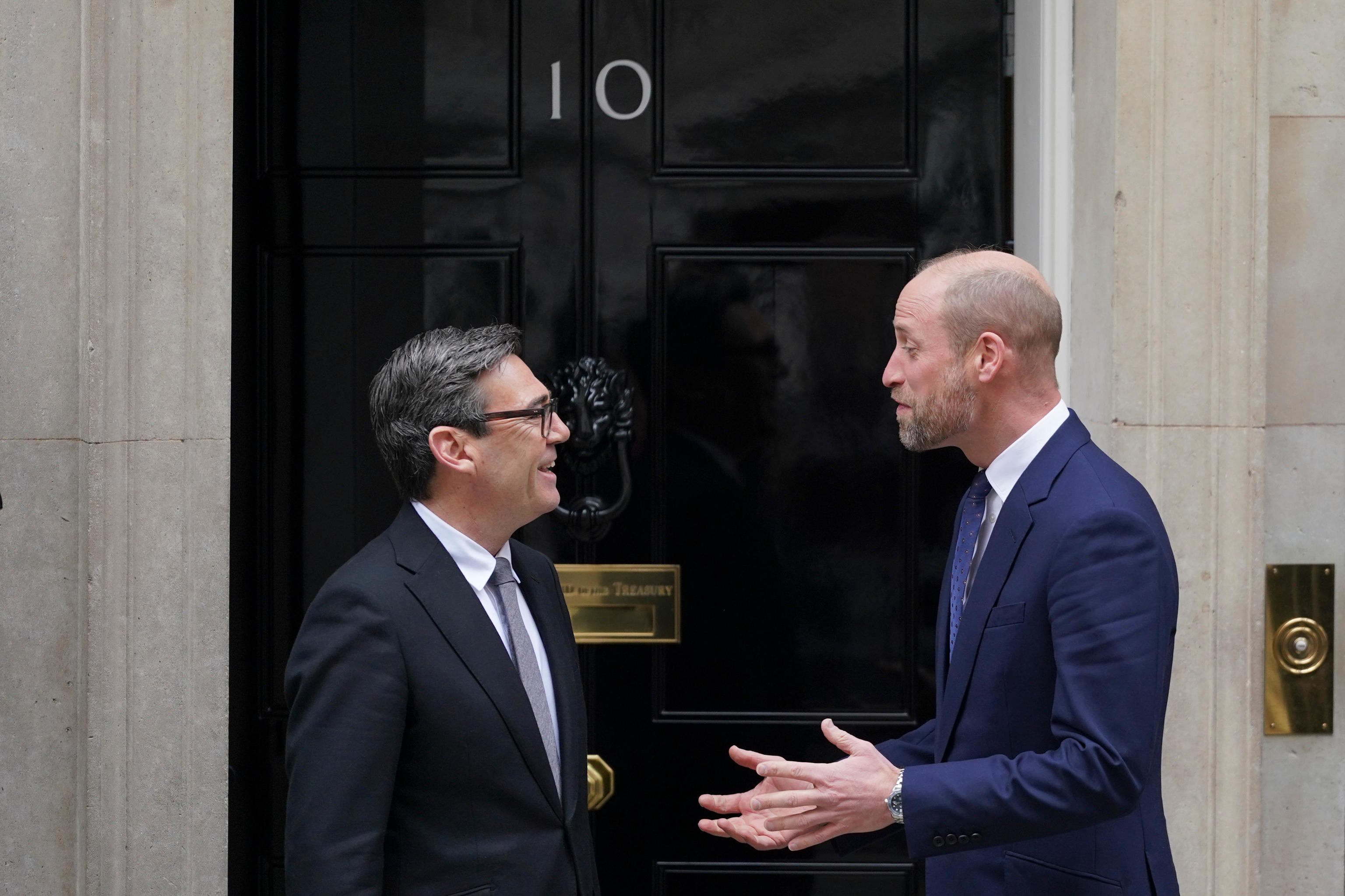
Another referendum in the United Kingdom on the European Union. If the one in 2016 was to leave, the next would be to rejoin. This is acknowledged by the one who, against all odds, has become the biggest advocate for the country's return to the Union: Prime Minister Andy Burnham. As he himself recognised in a parliamentary control session regarding the summit on Friday between the UK and Brussels, "it would be unthinkable" to return without a mandate from the ballot box.
Burnham's admission was the culmination of a week in which the possibility of London's return to the EU has become the biggest political front in the UK. Seven days before his statement in Westminster, the Prime Minister had formally announced his intention to bring his country closer to Brussels, admitting that "the Brexit we were offered has not worked. We have lost more than we have gained."
In that statement, Burnham cancelled his promise to present options for a new relationship with the EU to the public before the end of the year, ranging from mere commercial rapprochement to full membership. Instead, he simply promised a negotiation period and a decision after the next elections, scheduled for 2029, which, following this political shift, could be brought forward.
However, throughout the week, the pro-European instincts of the occupant of 10 Downing Street have become clear, culminating in Monday's statement. This declaration has raised certain tensions within Burnham's own cabinet. According to Bloomberg news agency, the Prime Minister caught his Government off guard with his promise of a referendum, which has generated some discontent.
The divisions over the EU within Burnham's team are not so much ideological as they are electoral strategy - read political survival - and coordination. The electoral issue lies in the fact that several members of his cabinet are MPs elected in constituencies that voted for Brexit. Thus, the idea of having to seek re-election with a proposal unpopular among their electorate does not seem particularly appealing. Especially considering that the Prime Minister plays to ambiguity, not clarifying whether he wants to be in Brussels or just near Brussels and, in the latter case, to what extent.
The clearest sceptic is the Chancellor of the Exchequer, John Healey. Others who, according to the British press, share his viewpoint, albeit more discreetly, are Health Secretary Yvette Cooper and Business and Trade Secretary Jonathan Reynolds. More politically significant is the apparent opposition of the Government's number two and true confidante of Burnham, Louise Haigh, who has played a central role in many of the Prime Minister's decisions, including reducing the power of the Chancellor, traditionally the most influential position in the cabinet. All of them come from regions that voted no to the EU in 2016. In Healey's and Cooper's constituencies, support for Brexit was nearly 70%. In Reynolds', it was 60%. In Haigh's, it won, but by a narrow margin, with 51% of the votes. Of course, even in Makerfield, which is the constituency Burnham represents, Brexit garnered approximately two-thirds of the votes.
But the electoral issue is only part of the queme ministerial with the head of Government. The other is Burnham's style. The Prime Minister always speaks of delegating power from London to the regions. However, when it comes to governing, he is personalistic. Burnham writes his own speeches, which gives him undeniable political appeal, but also makes him unpredictable. He tends to make statements on the fly, which sometimes surprise ministers.
This has been particularly evident in the case of the approach to the EU, where several of his ministers have learned about the official policy, literally, through the media. But sometimes Burnham's freedom of opinion has gone further, as when in September, in another parliamentary appearance, he expressed openness, in principle, to the possibility of a new referendum on independence in Scotland. On Monday, when he opened, in principle, the door to a new referendum, Burnham was responding to a relatively inconsequential Conservative MP, Bernard Jenkin, not to the leader of the opposition or any heavyweight in the Legislature. No one expected such a statement. But that is the Prime Minister.