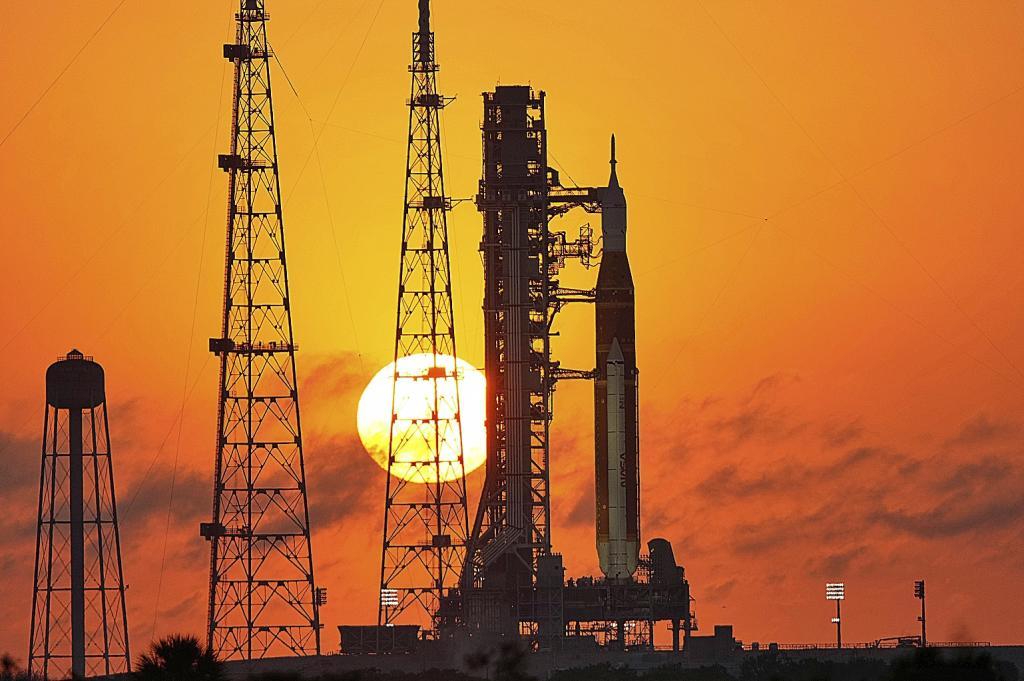
At 08:14 local time, and after resolving a technical issue detected in the ground support systems that forced a 24-hour postponement, the European launcher lifted off from the Guiana Space Centre in Kourou. On board were 36 new satellites belonging to the Amazon Leo network, the aerospace division of the e-commerce giant designed to compete directly with SpaceX's Starlink constellation in providing high-speed, low-latency internet globally.
The mission successfully completed its trajectory after two hours and four minutes of flight, culminating in the correct separation of the devices in low Earth orbit (LEO). This marks the fourth launch carried out since February by the consortium formed by ArianeGroup, Arianespace, and the European Space Agency (ESA). With this new deployment, the initiative originally born in 2019 as Project Kuiper and renamed Amazon Leo at the end of 2025 is nearing 400 operational satellites located in the coveted orbital range between 160 and 2,000 kilometers in altitude, consolidating the strategic rivalry between Jeff Bezos and Elon Musk.
To support the gradual expansion of its orbital network, the U.S. subsidiary initially contracted 18 launches with Ariane operators, later adding six additional contracts. This intense activity ensures a high volume of operations at the South American base for the coming years. Regarding the operational demands of this schedule, Jerôme Rives, director of the Ariane 6 program, stated before the launch: "Our goal is to conduct between nine and 10 launches annually starting in 2027. We will need to maintain this pace over the coming years. Of course, meeting deadlines, with quality standards and at competitive costs." He also emphasized the logistical capacity of the facilities, adding: "It's a fairly demanding rhythm considering we work with other clients. But we will be able to maintain it."
The acceleration of operations in Kourou is crucial following delays in U.S. launch windows, such as the recent technical failure of the Vulcan Centaur rocket from United Launch Alliance in Cape Canaveral. Amazon Leo aims to provide commercial service by the end of this year to clients such as Vodafone, airlines like Delta and JetBlue, or precision agricultural infrastructures, relying on the production of about 30 satellites weekly at its Kirkland plants, where each unit represents an estimated investment of two million dollars.
The emergence of Amazon Leo aims to close the gap with SpaceX, which holds a dominant position in the sector with over 11,000 satellites in service. Celebrating the deployment pace achieved by the project, the company's consumer head in Europe, Martijn van Delden, highlighted: "We have deployed nearly 400 satellites, making us the third-largest constellation in the world and the fastest to reach that number of satellites."
In addition to the commercial aspect, the company emphasizes the strategic nature of satellite telecommunications in areas with inadequate terrestrial infrastructure. Regarding the social impact of global connectivity, Van Delden stressed: "Connectivity has become critical infrastructure. It's how we connect with our loved ones. It's how we work from home. It's how we use AI. It's how gamers can download GTA VI... Unfortunately, many communities around the world lack access to the connectivity we take for granted."
The massive increase in satellites in low Earth orbit has raised alarms within the scientific community about the saturation of near space and the proliferation of space debris. When asked about the legal vacuum in managing orbital traffic, the head of the ESA's Ariane program, Louis Laurent, warned: "There is no more regulation than that concerning the frequencies used by satellites. But the quantity and their positioning are not regulated. Could low Earth orbit become the Wild West?" In the same vein, the specialist elaborated on the risks of saturation, stating: "In fact, it is already becoming so. For example, launches are limited by satellites in orbit, because they must be avoided. You cannot launch whenever you want, as it would interfere with them."
In the face of the constant threat of collision between devices and debris from past missions, the management of the Guiana Space Centre implements strict safety controls for each launch. The mission director in the Jupiter building, Maël Mattox, acknowledged the magnitude of the challenge, admitting: "That risk exists." However, Mattox detailed the existing prevention protocols, indicating: "Here we manage it considering three types of data. First, the assessment by Arianespace, based on the constellations identified in low Earth orbit. Second, the data provided by our client. And third, the information provided by CNES (French National Centre for Space Studies) regarding the two space stations. We gather all this data and define the moment that allows for the launch, thus avoiding any collision."