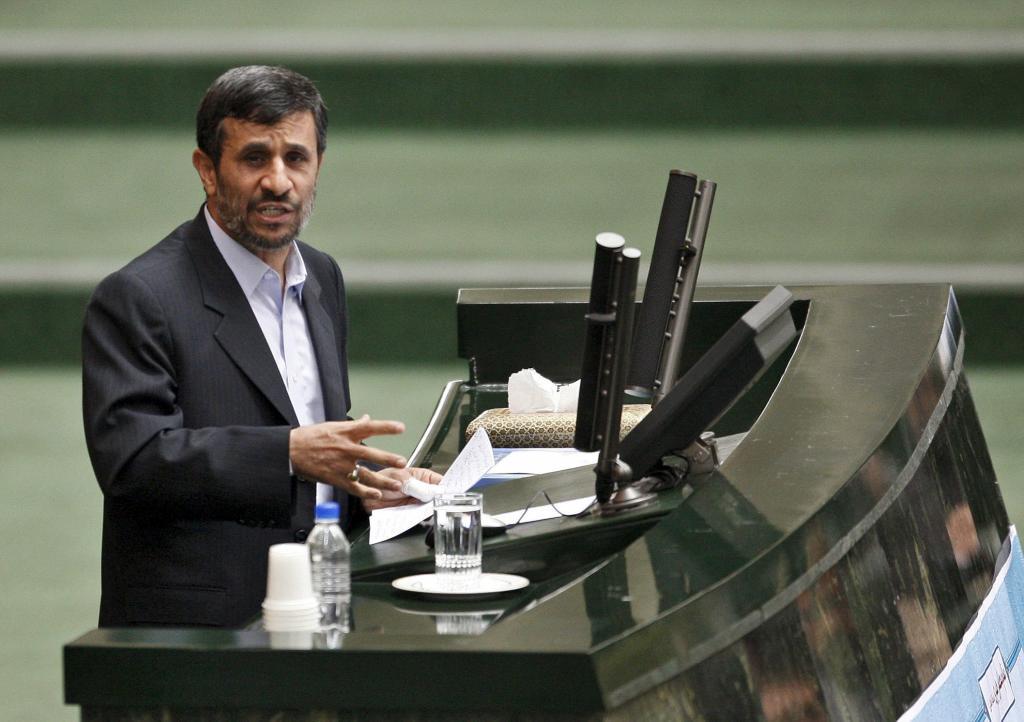
On March 1, just a few hours after the start of the bombing of Iran by the United States and Israel, initial reports indicated that the residential complex where former President Mahmoud Ahmadinejad lived had been hit, and that the politician, one of the most well-known anti-Semites, could be one of the victims. Alongside the five dozen high-ranking government officials and military personnel, perfectly identified and located by Israeli intelligence services, who had demonstrated an almost impossible knowledge and control of the situation on the ground.
However, on May 19, The New York Times caused a widespread shock by publishing a story that seemed like science fiction, stating that Israel actually bombed the building to help him escape from his house arrest in a bold plan to elevate him as the new leader in the face of what they believed would be the imminent fall of the regime, but everything went awry due to last-minute doubts from the involved party.
The reactions were of disbelief. Given the character's profile, the implausibility of the operation, and because it seemed like rumors spread either by the former president's enemies trying to discredit him or by Israeli intelligence services to expose an old enemy. Everything seemed to be part of internal struggles within the framework of a possible incipient revolution to overthrow the regime. The words in the days leading up to it from President Donald Trump, suggesting that it would be ideal for "someone from within" to take charge of the country, somewhat similar to what happened in Venezuela, served to fuel speculations, settling of scores, and a sense of paranoia.
The possibility that Ahmadinejad, known for his speeches advocating to "wipe Israel off the map" 20 years ago, for his hatred towards the American "Great Satan," and his defense of the Iranian nuclear program, could be the chosen one sounded delusional, impossible. Even if Washington and Tel Aviv wanted a transition, the move seemed risky, unfounded. Until today.
This Monday, the same four reporters from The New York Times who authored that story have published a much more surprising second part, explaining that Israeli intelligence services have spent years cultivating a relationship with Ahmadinejad, giving him money for travel, trying to turn him into an asset, and even sending the top spy chief to meet with him in places like Budapest, under the pretext of university conferences on climate. And that the famous bombing was not at all a mistake, but part of a very ambitious plan that went wrong for reasons that have not yet been revealed.
"On February 28, an Israeli airstrike hit Ahmadinejad's compound, hitting the building of his bodyguards and his armored vehicle. After the attack, according to four senior Iranian officials, a black Peugeot arrived at the scene, picked up Mr. Ahmadinejad, and swiftly transported him away from the chaotic scene. U.S. and Iranian officials with knowledge of the operation claimed that the vehicle was driven by Mossad agents, who took him to a secret safe house," the article states.
The New York newspaper, which does not have information on whether the Iranian became an agent, informant, or something similar and seems to suggest through its silences that he did not, starts with an interview with the rector of the Ludovika University of Public Service who confirms that he indeed extended the invitation to the Iranian following instructions from the Government of Viktor Orban, who already indicated then that everything was part of a peace negotiation plan.
Ahmadinejad's relationship with his government and the ayatollahs has been very poor for years. He has clashed repeatedly with the leaders, accusing them of corruption. This led to his disqualification from participating in up to three consecutive presidential elections, his team being harassed or detained, and his freedom of movement being controlled from the highest levels. At home, he was confined to his residence in the Narmak neighborhood, east of Tehran. Abroad, he had to request special permits to attend international events, and he was detained at airports on several occasions.
Apparently disappointed and furious, he saw himself as a transitional option and has once again cultivated both his populist and international profile. In recent years, he has learned English, delivered speeches in that language, toned down his religious rhetoric, changed his attire, and even moderated his stance towards Israel. In 2017, he even sent public letters to Donald Trump. His resentment towards the regime, and his fear that Washington and Tel Aviv might try to impose a puppet government with someone from outside the country at the helm, could have been possible factors in his conversations with his country's historical enemy, according to the Times.
"According to U.S. officials, in recent years Israel secretly paid money to Mr. Ahmadinejad to cover his accommodation and travel expenses, and Israeli agents met with him abroad on several occasions, even during his trips to Budapest," the newspaper states, but it cannot explain under what capacity the former president accepted the payments or if he knew in 2024 or other dates that it was all a 'trap' to sit him down with his enemies. Or if once that had happened, both parties knew that it would be impossible to justify in Tehran, regardless of how it had happened.
"Ahmadinejad's visit to the university in 2024 and a second one the following year were part of an Israeli effort that lasted several years to groom him as an intelligence asset who, when the time came, could be installed as the new leader of Iran, according to U.S. and Iranian officials familiar with the operation, who spoke on condition of anonymity to describe sensitive intelligence information," The New York Times points out. "Recruiting him was such a high priority for Israel that the then head of the country's Intelligence services, David Barnea, even traveled to the Hungarian capital in 2024 to meet with him personally, according to former U.S. officials. Shortly after, they added, the Mossad, Israel's foreign intelligence service, notified the CIA that they had been in contact with him."
Journalistic reports do not have all the answers. They have not been able to explain whether the politician's faith failed, his anger at seeing the devastation of the attacks, his resignation at not seeing an uprising in the streets, or if he never really agreed to anything and was surprised by what happened.
"Finally, Ahmadinejad left the safe house under circumstances that are still unclear and was not seen in public again until last Monday when he made a brief appearance at the funeral procession of the slain Supreme Leader, Ayatollah Ali Jamenei," they simply state. "His current situation remains uncertain. However, four senior Iranian officials claimed that he is under the custody of the Intelligence service of the Islamic Revolutionary Guard, under house arrest now that Iran is aware of much of his interactions with Israel."