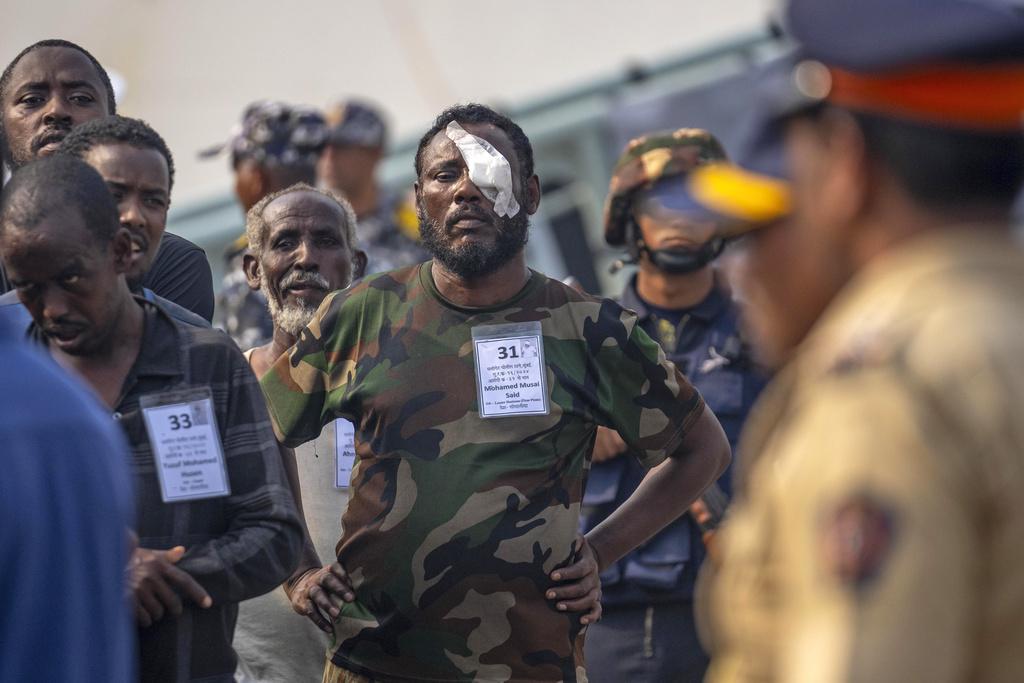
One of the most undesirable consequences of the collapse of the Somali state in the civil war of 1991 was the transformation of its fishermen into pirates. When the government of Mogadishu disintegrated, its waters were left unprotected, and European, Asian, and Middle Eastern fleets plundered them with total impunity: it is estimated that in the 1990s between 300 and 400 million dollars' worth of fish were illegally extracted annually. At the same time, foreign companies and governments used the Somali coast as a dumping ground for toxic and radioactive waste.
The first armed groups that responded to this looting called themselves the "Voluntary Coast Guard" and, from their perspective, they were defending their livelihoods. Since weapons were abundant, they were all well-equipped. The transition to organized kidnapping was gradual, driven by the logic of money: when the first ransoms reached coastal villages with an average income of less than a dollar a day, the kidnapping industry yielded huge profits and changed the economy of the Horn of Africa.
For the past few months, Somali pirates have returned, and they have done so in a big way with several kidnappings. Their new big catch could not be more lucrative. The Cameroonian-flagged cargo ship Lutuf, carrying a shipment of Turkish military equipment full of weapons, drones, and satellite equipment destined for Turksom, Turkey's largest military base outside its borders located in Mogadishu, was hijacked on Monday, August 17, as it headed towards the dilapidated Somali capital.
The ship had set sail at the end of July from the Turkish port of Tekirdag, home to the main testing and delivery facilities of Baykar, the Turkish giant in drone production. The hijacking of the ship has triggered an unprecedented military response: Turkey, the main partner of the current Somali government, has deployed a significant fleet of ships, helicopters, and spy drones in the area to try to recover the cargo, with at least one airstrike already carried out against pirate positions on the coast.
The incident occurs in the context of the resurgence of piracy in the Indian Ocean in 2026, driven by the Iran war and the blockade of the Strait of Hormuz, although so far pirate groups had only captured bulk carriers and fishing vessels: never a shipment of strategic weaponry of this caliber. This catch surpasses them all, and if successfully landed, it would make the involved clan the best-armed militia on the continent. The total list of captures in 2026 includes five commercial ships since April. Four remain detained with 67 crew members on board after more than three months with no progress in negotiations.
What factors have caused their return? There are three simultaneous factors: the first is economic and political: the U.S. provided $476 million in aid to Somalia in 2024, but that figure was reduced to $70 million in 2025 and barely three million in the first months of 2026; the Trump administration's cuts have dismantled programs that were curbing pirate recruitment. The second is geopolitical: the Iran war has diverted military ships and surveillance resources to the Persian Gulf, leaving the Horn of Africa less patrolled. The third is the economic logic of the business itself: in one of the poorest countries in the world, a ransom of millions of dollars turns piracy into one of the few options for enrichment available.
Are today's Somali pirates very different from those in 2005? The only thing that has changed somewhat is the method of assault: they have now added the strategy of camouflaging themselves on another previously hijacked ship, allowing them to sail hundreds of miles from the coast without raising suspicions. The Lutuf was boarded from the Sward, one of the previously captured cargo ships. From that vessel, they launch two or three fast wooden boats, typical of fishing in the Indian Ocean, with high-powered engines that approach the target cargo ship at dawn or sunrise with the sun at their backs to take advantage of the lack of visibility. Armed with AK-47s and RPG grenade launchers, they use hook ladders to board the prey, climb the hull, and take over the bridge.
They are in shape. The entire attack can last less than 30 minutes. Commercial ships, slow, with low sides when loaded, with inexperienced and poorly paid crews, are easy targets, and international protocols recommend not to resist. Some have armed private security, with well-trained mercenaries, but not the majority. The case of the Lutuf did have armed guards and still could not repel the attack, suggesting that current groups have superior training and coordination compared to those of previous decades. Once in no man's land, far from areas controlled by the current Somali government, negotiations begin that can last for months, and between one and five million dollars are paid.
Modern Somali piracy is not a chaotic and opportunistic phenomenon, but a structured industry with investors financing operations, leaders planning attacks, trained assault teams, and negotiators in London. In short, a criminal enterprise as organized as any mafia.